
Turmeric vs Curcumin: The Most Important Difference You Need to Know (2026)
This is the question I get asked more than almost any other. You’ve heard that turmeric is incredible for inflammation, joint pain, and brain health. Then you see the word “curcumin” on a supplement label and wonder: are they the same thing? Is the turmeric in my curry doing the same job as a supplement? And why do some products cost $8 while others cost $60? The answer to all of these comes down to understanding one fundamental difference — and it’s the single most important piece of knowledge for anyone buying a turmeric supplement.
Table of Contents
- About Robert Lees
- What Is Whole Turmeric? The Full Orchestra
- What Is Curcumin? The Star Soloist
- Which One Do You Actually Need?
- The Bioavailability Problem — and the Solutions
- 2026 Formulation Guide: Every Delivery Technology Explained
- How to Read a Supplement Label
- Red Flags: How to Spot Low-Quality Products
- My Current Recommendation
- Frequently Asked Questions
About Robert Lees
I’m Robert Lees, NZ-based supplement researcher and founder of OrGainIt Health Revelations. 9+ years of independent turmeric and curcumin product testing and research. My daughter Makayla’s MS diagnosis started me down this path; my own joints kept me here. Not a doctor — but I read the actual studies, check the PMIDs, and test products before recommending them. Full methodology at my testing protocol and about page.
What Is Whole Turmeric? The Full Orchestra
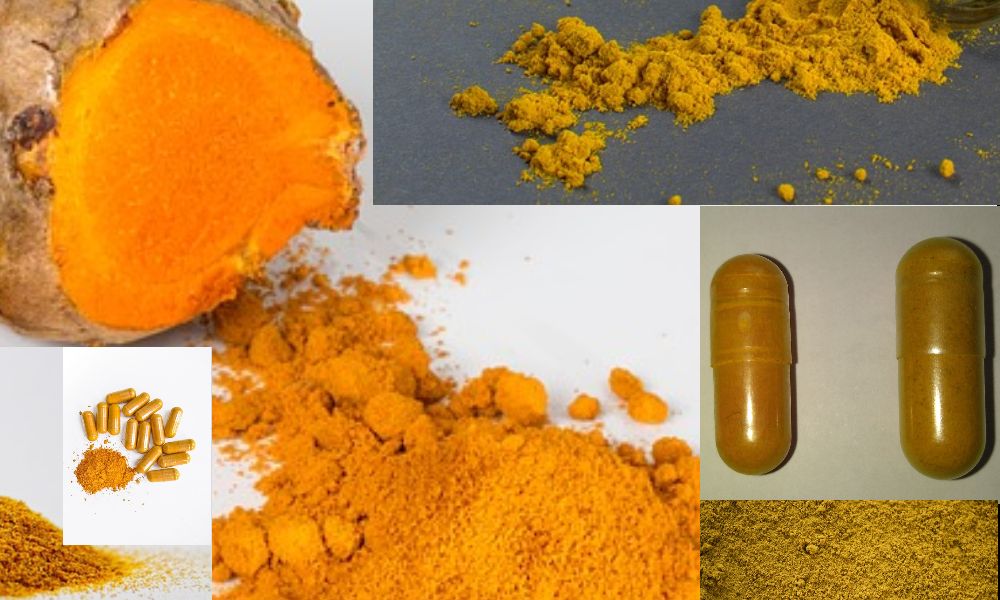
Turmeric (Curcuma longa) is the bright golden-orange root of a ginger-family plant native to South Asia. For over 4,000 years it’s been a staple of Ayurvedic medicine and Asian cuisine. When you use turmeric spice from the grocery store or the fresh root, you’re getting the whole plant — hundreds of bioactive compounds working in synergy:
- Curcuminoids: The family of active compounds that includes curcumin. Typically only 2–5% of dried turmeric powder by weight.
- Turmerones: Aromatic oil-based compounds with their own neuroprotective and anti-inflammatory properties that complement curcumin — and actually enhance curcumin absorption (the basis of BCM-95® technology).
- Vitamins and minerals: Manganese, iron, vitamin B6, potassium, fibre.
- Polysaccharides and resins: Support gut health and have mild anti-inflammatory effects.
Using whole turmeric in cooking is excellent for general wellness and foundational anti-inflammatory support. It’s your daily baseline habit. But for a therapeutic, targeted effect — matching what’s used in clinical trials — you need concentrated curcumin extract.
What Is Curcumin? The Star Soloist
Curcumin is the primary active compound in turmeric and the subject of over 3,000 peer-reviewed studies. It’s a polyphenol responsible for turmeric’s distinctive yellow colour and the vast majority of its studied therapeutic benefits. When research shows turmeric can reduce arthritis pain, protect brain cells, improve cardiovascular markers, or support gut health — the active agent in those studies is almost always concentrated curcumin extract, not kitchen turmeric powder.
To get a therapeutic dose — say, 1,000mg of curcumin — from culinary turmeric powder, you’d need to consume roughly 30–50 grams of powder daily. That’s not practical or pleasant. This is why high-quality supplements concentrate and standardise the curcumin, typically to 95% curcuminoids.
Curcumin’s key mechanisms: NF-κB inhibition (master inflammation switch), COX-2 suppression (pain pathway), antioxidant activity, BDNF elevation (brain health), and cytokine modulation. Full detail at turmeric for inflammation and what is turmeric good for.
Which One Do You Actually Need?
This isn’t a case of one being “better” — it’s about the right tool for the right job:
Use Whole Turmeric For:
- Daily culinary use — curries, soups, teas, golden milk
- General wellness and foundational antioxidant support
- The full synergistic spectrum of the plant’s compounds
- Long-term dietary habit alongside a supplement
Use Curcumin Extract For:
- Targeting a specific health concern (joint pain, inflammation, cognitive health)
- Achieving a therapeutic dose that matches clinical trial parameters
- Fast-acting, potent, and measurable effect
- When you need certainty about what’s in each dose
The optimal midlife strategy: Cook with whole turmeric daily (foundational support) and supplement with standardised curcumin extract for targeted therapeutic benefit. You get the whole orchestra and the star soloist.
The Bioavailability Problem — and the Solutions
Here’s the part most supplement sites gloss over — and it explains why some people take turmeric for months and feel nothing while others see meaningful results quickly.
Standard curcumin, even extracted and standardised to 95% curcuminoids, has notoriously poor bioavailability. It’s rapidly metabolised in the gut and liver, poorly soluble in water, and poorly absorbed. Most of a standard curcumin dose is excreted before it reaches the tissues where it’s needed. This is a real biochemical problem documented in the pharmacological literature — not a marketing claim.
The dose in the bottle isn’t what matters. The dose reaching your bloodstream and target tissues is what matters.
The good news: researchers have developed several delivery technologies that dramatically increase curcumin bioavailability. This is where the past decade of supplement science has made genuine advances — and where this site’s newer content covers territory that didn’t exist when this page was first written.
2026 Formulation Guide: Every Delivery Technology Explained
| Technology | How It Works | Bioavailability | Best For | Reviews |
|---|---|---|---|---|
| Longvida® (SLCP) | Solid lipid curcumin particles — protects through digestion, crosses blood-brain barrier | 95x higher | Brain health, cognition, neuroinflammation | Guide → |
| CurcuWin® (UltraSol) | Water-soluble carrier system for rapid absorption | 46x higher | Fast-acting inflammation, athletic recovery | Benefits → | Reviews → |
| Meriva® (Phytosome) | Bonds curcumin to phosphatidylcholine for enhanced cellular uptake | 29x higher | Joint pain, osteoarthritis — most arthritis-specific trial data | Reviews → |
| CuroWhite™ | Colourless, odourless curcumin extract — removes yellow pigment, retains activity | Enhanced | Zero staining, easier incorporation, clean formulas | Benefits → |
| BCM-95® (Biocurcumax) | Combines curcuminoids with turmeric essential oil (ar-turmerone) — natural synergy | 7x higher | General inflammation, RA — no synthetic enhancers | Benefits → |
| Liposomal | Encapsulates curcumin in phospholipid spheres — mirrors cell membrane for direct uptake | ~20x higher | Liquid delivery, gut inflammation, those avoiding capsules | Best products → |
| Fermented Turmeric | Fermentation pre-digests curcumin, improving gut absorption and tolerance | Enhanced | Gut tolerance, piperine-free option, whole-food approach | Guide → |
| Standard + Piperine | Black pepper extract inhibits liver metabolism of curcumin | ~20x higher | Budget-friendly baseline — needs higher dose than advanced forms | Buying guide → |
? Which Formulation Actually Reaches the Brain?
Longvida® is the answer — and it’s not close. The SLCP (Solid Lipid Curcumin Particle) technology was specifically engineered to cross the blood-brain barrier. In a landmark 18-month, double-blind, placebo-controlled trial at UCLA (Small et al., 2018), participants taking 90mg of Longvida® twice daily showed:
- 28% improvement in memory and attention tasks vs placebo
- Measurable reductions in brain amyloid and tau on PET scans — proteins that can only be affected if the compound actually crosses into the brain
(Small GW et al., Am J Geriatr Psychiatry, 2018. PMID: 29246725)
Liposomal curcumin is excellent for systemic and gut absorption but lacks equivalent human evidence for brain-specific effects. Meriva® and BCM-95® have no meaningful brain-barrier crossing data. If brain health is your goal, Longvida® is the only formulation with the human proof. Read my full guide: Longvida curcumin — brain bioavailability explained.
For my continuously updated curation of the highest-absorption formulas I currently recommend: best curcumin supplements for inflammation in 2026 on Benable. Also see brand-specific reviews: Nootropics Depot curcumin, Nootropics Depot CuroWhite.
How to Read a Supplement Label
What to Look For
- “Curcumin Extract” or “Turmeric Extract Standardised to 95% Curcuminoids”: This is the gold standard. It tells you the active compounds have been extracted and concentrated. If the label just says “Turmeric Powder” or “Turmeric Root,” you’re likely buying kitchen spice in a capsule.
- A named bioavailability technology: Longvida®, Meriva®, CurcuWin®, BCM-95®, liposomal, or piperine (BioPerine®). An unnamed “proprietary blend” with no enhancer is a red flag.
- Dose in the evidence range: 500–1,500mg curcuminoids daily of a bioavailable form. Below 500mg of a well-absorbed form is unlikely to be therapeutic.
- Third-party testing certification: NSF, USP, or ConsumerLab verified. This confirms label accuracy — critical given adulteration risks in the global turmeric supply chain.
- Certificate of Analysis (CoA) available: Reputable brands publish their lab results. Heavy metals, microbials, and curcumin content should all be verified by an independent lab.
Red Flags: Low-Quality Products and Adulteration
- Vague labels: No curcumin percentage, no named delivery technology, no third-party testing mentioned
- Proprietary blends that hide doses: Often a way to use a small amount of expensive extract alongside cheap turmeric powder filler
- Suspiciously low prices: Extracting and standardising curcumin is an expensive process. Cheap products almost always cut corners on quality or purity
- No CoA available: If a brand won’t show you their lab results, treat that as a refusal to be accountable
- Adulteration risk: This is the one most people don’t know about. Lead chromate contamination and synthetic dye adulteration (metanil yellow, Sudan dyes) have been documented in the global turmeric supply chain. Cheap, unverified turmeric from unknown sources carries real contamination risk. Full detail: side effects of turmeric including adulteration risks and turmeric adulteration guide
My Current Recommendation
? A Formulation I Can Stand Behind
If you want one well-rounded, verified starting point, my current recommendation is Turmeric 3D by Organixx. USDA certified organic, fermented turmeric (enhanced bioavailability, no piperine), third-party tested with CoA available. For joint-specific use, see my Meriva guide. For brain health: Longvida guide. Read my full Turmeric 3D review for 30-day personal testing notes.
Frequently Asked Questions
Can I just eat more curry to get the benefits?
For general wellness and foundational anti-inflammatory support, yes — eating turmeric in food is genuinely beneficial. For therapeutic effects matching what’s used in clinical trials (joint pain reduction, cognitive benefit), you can’t eat enough turmeric to get the required dose. A concentrated, bioavailable curcumin supplement is necessary for that level of effect.
What’s the difference between curcumin and curcuminoids?
Curcumin is the primary curcuminoid — but it’s part of a family of three related compounds (curcumin, demethoxycurcumin, bisdemethoxycurcumin). A supplement “standardised to 95% curcuminoids” contains all three in their natural ratio. Most clinical research focuses on curcumin specifically, but the full curcuminoid spectrum is considered preferable to isolated curcumin.
Why is black pepper so important?
Piperine (the active compound in black pepper) inhibits specific liver enzymes (CYP3A4) and intestinal transporters that rapidly metabolise and excrete curcumin. This “holds the door open,” allowing curcumin to absorb into the bloodstream rather than being cleared. Shoba et al. (1998) showed piperine increases curcumin bioavailability by approximately 2,000%. Important caveat: piperine also increases absorption of many medications — if you’re on prescription drugs, discuss with your pharmacist before using a piperine-containing supplement.
Is a “Turmeric Complex” the same as curcumin extract?
Not necessarily — “complex” is a marketing term with no regulated definition. You must check the Supplement Facts panel. If it doesn’t explicitly state it’s “standardised to 95% curcuminoids” or name a specific bioavailability technology (Longvida®, Meriva®, etc.), you can’t know what you’re actually getting.
Does cooking turmeric destroy the curcumin?
Some curcumin degradation occurs at very high cooking temperatures, but normal cooking preserves a useful amount. The more significant issue is that dietary turmeric’s curcumin content (2–5%) combined with standard absorption makes food alone insufficient for therapeutic doses. Cooking with black pepper and a fat source significantly improves absorption. A daily turmeric tea and cooking habit is a meaningful complement to supplementation — not a replacement. See turmeric tea recipe and foods that use turmeric.
What dose of curcumin should I take?
Clinical trials typically use 500–2,000mg curcuminoids daily of a bioavailable form. The practical starting range for most people: 500–1,000mg daily of a named bioavailability-enhanced formulation, taken with a fat-containing meal. More isn’t always better — before exceeding 2,000mg daily, read the full safety information at side effects of turmeric.
Is synthetic curcumin a concern?
Yes. Some manufacturers use petroleum-derived synthetic curcumin, which lacks the synergistic compounds of naturally-sourced curcumin and has an uncertain safety profile. Reputable brands use Carbon-14 (radiocarbon) testing to verify natural origin. Look for brands that publish this data or certify natural sourcing. This is another reason third-party certification and transparent lab results matter.
Should I choose turmeric or curcumin for specific conditions?
For specific conditions, curcumin extract in a targeted formulation is the appropriate choice. Joint pain → Meriva® phytosome. Brain health → Longvida® SLCP. Fast-acting inflammation → CurcuWin®. Gut inflammation → liposomal or fermented. Whole turmeric in food works alongside these as a foundational daily habit. For condition-specific guides: arthritis, brain health, inflammation.
Thanks for clarifying the difference between Turmeric and Curcumin. Now, I know the difference between the two and no longer confused if I have to find another source of Curcumin when I already have a Turmeric tea here in my closet. I’d like to take this opportunity to ask you a question since I consider you as an expert in this kind of product. I recently bought a tea that’s made up of Turmeric for the consumption of the family and replacement for coffee. But when I tried convincing my father to take the tea, he happened to read the label and noticed that those who have suffered from a stroke and taking anticoagulant drug should not take Turmeric tea. I wonder what is the logic in there? I thought it can be taken by literally anyone with the desire to get a good health.
Hi Gomer,
That’s an excellent question — and I’m glad you asked, because this is where turmeric’s benefits and cautions intersect.
The key is that turmeric, and especially curcumin extracts, can have a natural blood‑thinning effect. For most people, this is beneficial since it may help circulation and reduce clot risks. But for people who:
Have already suffered a stroke
Are taking blood thinners (anticoagulants like Warfarin, Plavix, etc.)
…the additional thinning effect from turmeric could increase the risk of bleeding, which is why supplement and tea manufacturers are required to put that precaution on their labels.
So your father was absolutely right to spot that warning. It doesn’t mean turmeric is “bad” — it just means it must be used carefully in people on those medications.
For your own use, turmeric tea can still be a wonderful daily ritual. In fact, here are two articles you might find useful:
Making Turmeric Tea – a guide to safe and beneficial daily use.
Turmeric vs Curcumin – a deeper dive into when turmeric as a whole food is enough, and when curcumin supplements are considered.
But for your father, the safest step is to discuss turmeric use with his doctor, especially since he has a medical history involving stroke and medication.
Thanks again for raising such a thoughtful point — it helps everyone in the community better understand that “natural” doesn’t always mean “no cautions.”
To your health,
Robert
Thank you very much for putting some clarity on the difference between the curcumin and turmeric. I didn’t understand that before and so this is very educative for me. I will like to know if you have any post that gave some quality supplements for Tumeric and also to know what both of them work on specifically.
Hey thanks its great to hear when the little things that are important get appreciated:) I most certainly can point out my two favorite for you.
My most noticed all rounder when it comes to a quality curcumin extracted turmeric product that specifically help with inflammation and energy is the Science Naturals Turmeric With Bioperine supplement. they have been in business for many years with a great track record.
The other is most favorited because of the matrimony which deliver a maximum absorption and extra benefit, Offering better sleep, attacks inflammation, weight loss and more and that’s Prosper Wellness turmeric cbd.
Yes, turmeric is known for its numerous benefits when used for various health conditions and have been one of the best household spice in my house since I got to know about it. Learning about that which is present in turmeric (curcumin) which gives it such usefulness has kept me really amazed as to how the importance of most natural things have been underrated by man. It’s a pleasure learning these things
Hi Benson, Nice of you to take the time to aspire.
Great to hear you got something from the article here, and as always it pleasing that turmeric is a regular in your house. To say the least I hope you add a little more black pepper in the mix:).
Regards Rob
Okay, this sounds pretty good to me even though I am not much of a big fan of using turmeric. It seems that there are different types of supplement products and it is always better to look for that one that is reliable and of good quality. I have a friend who uses a supplement. I should share this post with her as she will find it even more helpful. Good work!
Hi John, I’m glad to hear that I may have planted a seed about considering a supplement to you:) And please by all means share this and or the many other top Turmeric News of the many different things it is good for. I would humbly appreciate that, and I do love the fact that the info here can help people live better.
Thanks for stopping.
Rob