
Turmeric for Pain Relief: Clinical Evidence Across All Pain Types (2026)
Medical Disclaimer: The information on this site is not intended to be a substitute for professional medical advice, diagnosis, or treatment. Pain can have many underlying causes requiring professional diagnosis. Please consult a licensed healthcare professional before changing any treatment plan or adding supplements. This content is for informational purposes only.
⚡ Quick Answer: Does Turmeric Work for Pain Relief?
Yes — with clinical trial evidence that matches or exceeds common over-the-counter anti-inflammatories for specific pain types. Kuptniratsaikul et al. (2014, PMID 24672232) found curcumin equalled ibuprofen for knee osteoarthritis pain. Shep et al. (2019, PMID 30712937) found it comparable to diclofenac with significantly fewer GI side effects. The mechanism — NF-κB suppression reducing inflammatory cytokines driving pain — is well-established across multiple pain types.
- Strongest evidence: Osteoarthritis, rheumatoid arthritis, gout, post-exercise DOMS
- Emerging evidence: Neuropathic pain, chronic systemic inflammation, fibromyalgia-type presentations
- Critical caveat: Standard turmeric powder absorbs at ~1–3% — formulation determines whether clinical results translate to you
 My interest in turmeric for pain is not academic. An ankle injury from sport has been a chronic companion since the late 90s — the kind that settled into background inflammation that affected sleep, movement, and energy in ways that standard painkillers addressed only by masking. Testing curcumin formulations systematically over seven years changed that picture significantly. This page consolidates everything this site has researched, tested, and validated across joint health, neuropathy, post-exercise recovery, and systemic pain — the full picture, not a cherry-picked summary. See my testing protocol and about page.
The Mechanism: Why Turmeric Addresses Pain at the Source
Most conventional pain relief works on the symptom — blocking pain signals after inflammation has already occurred. Curcumin works differently: it suppresses NF-κB, the transcription factor that activates the genes producing the inflammatory mediators (TNF-α, IL-1β, IL-6, COX-2) that drive pain in the first place.
This upstream approach is why turmeric’s pain benefits are:
- Cumulative — effects build over 4–8 weeks as inflammatory load reduces, rather than providing instant relief
- Broadly applicable — NF-κB is central to most chronic pain states, not just arthritis
- Better tolerated — no gastric erosion risk (NSAIDs), no rebound inflammation, no dependence
Additionally, curcumin inhibits COX-2 directly — the same enzyme targeted by prescription anti-inflammatories like celecoxib — and suppresses the 5-LOX lipoxygenase pathway that drives prostaglandin-mediated pain. This dual COX/LOX inhibition is mechanistically distinct from and complementary to standard NSAID action. For the full mechanism detail, see our turmeric for inflammation guide.
Pain Type by Pain Type: What the Evidence Shows
Joint Pain — Osteoarthritis (The Strongest Evidence Base)

The clinical trial record for curcumin in osteoarthritis is genuinely impressive:
- Kuptniratsaikul et al. 2014 (PMID 24672232) — 367 knee OA patients, curcumin equivalent to ibuprofen at 12 weeks. Curcumin group had significantly fewer adverse events (GI distress).
- Shep et al. 2019 (PMID 30712937) — curcumin vs diclofenac for knee OA, curcumin group showed comparable pain reduction with superior tolerability profile.
- Belcaro et al. 2010 (PMID 20657536) — Meriva® phospholipid formulation showed significant WOMAC score improvement in knee OA over 8 months. The formulation matters: Meriva delivered results where standard curcumin had previously underperformed.
The consistency across independent trials is the signal here — this is not a single outlier study. For our full arthritis evidence deep dive: turmeric for arthritis.
Rheumatoid Arthritis — Autoimmune Joint Pain
Chandran & Goel (2012, PMID 22052967) compared curcumin to diclofenac sodium in RA patients. The curcumin group showed the highest percentage of improvement in DAS28 scores and ACR criteria — outperforming the conventional NSAID on multiple inflammatory markers.
RA is an NF-κB-driven autoimmune condition — curcumin’s mechanism is particularly well-matched. The same logic applies to psoriatic arthritis, where overlapping inflammatory pathways mean the evidence from both the Antiga 2015 trial (skin) and the arthritis trials is directly relevant.
Gout — Crystal-Induced Acute Pain
Gout pain is driven by monosodium urate crystal deposition triggering a severe acute inflammatory cascade — specifically NLRP3 inflammasome activation and IL-1β production. Curcumin suppresses both pathways. Additionally, curcumin’s xanthine oxidase inhibitory activity reduces uric acid production — addressing the cause of crystal deposition, not just the inflammatory response to it.
Full evidence and protocol: turmeric for gout.
Neuropathic and Nerve Pain
Neuropathic pain involves central sensitisation and neuroinflammation — distinct from nociceptive joint pain and generally less responsive to NSAIDs. Curcumin reduces neuroinflammatory cytokines including TNF-α and IL-1β in the central nervous system. Combined with CBD (which modulates CB1 receptors involved in central pain sensitisation), this is one of the most promising non-pharmaceutical approaches to neuropathy.
The combination product specifically designed for this application: TurmeriCBD by Prosper Wellness. The protocol for combining: CBD and turmeric for pain.
Post-Exercise and Recovery Pain (DOMS)
Delayed Onset Muscle Soreness (DOMS) is an inflammatory response to exercise-induced microtears. Curcumin reduces the cytokine cascade driving DOMS — both intensity and duration. This is why curcumin is increasingly adopted in sports nutrition, where managing inflammatory recovery without blunting training adaptation is the goal.
The practical protocol: take curcumin post-workout with a fat-containing meal. The anti-inflammatory effect is most relevant in the 24–72 hour window. Both joint-specific formulas and general curcumin supplements apply here.
Chronic Systemic Pain — The Inflammatory Load Picture
For people experiencing diffuse, chronic pain that defies specific diagnosis — the kind associated with midlife metabolic changes, poor sleep, chronic stress, and cumulative inflammatory burden — curcumin addresses the underlying load rather than specific lesions.
This connects directly to the cortisol-inflammation-pain cycle, the metabolic inflammation picture, and the liver-inflammation axis. Treating chronic systemic pain requires addressing the systemic environment — not just blocking individual pain signals.
Formulation Determines Whether Any of This Applies to You
The clinical trials above used specific, bioavailable formulations — not generic turmeric powder. This is the most important practical point on this page. Standard turmeric powder absorbs at 1–3% — the trials used:
- Standardised curcumin extract with piperine (Kuptniratsaikul, Shep trials)
- Meriva® phospholipid-bound curcumin (Belcaro trial) — best for joint-specific applications. See: what is Meriva curcumin
- BCM-95® — curcumin with essential oils, piperine-free. See: BCM-95 benefits guide
For the full formulation comparison: turmeric vs curcumin and 7 factors for selecting a supplement.
Dosage and Protocol for Pain Management
- Curcumin extract: 500–1,000mg daily of standardised curcumin extract (not whole turmeric powder). Trials used 1,000–1,500mg in divided doses for active pain management.
- With piperine: 5–20mg piperine increases curcumin absorption ~2,000%. Skip if on medications — see drug interaction guide.
- Timing: With a fatty meal — always. Both curcumin and lipid-carrier formats absorb significantly better with dietary fat.
- Timeline: Acute pain reduction: 4–6 weeks. Full anti-inflammatory effect assessment: 8–12 weeks. This is not a fast-acting analgesic — it is an upstream inflammatory load reducer.
- For neuropathy: Consider the CBD+curcumin combination — the dual mechanism addresses both neuroinflammation and central pain sensitisation simultaneously.
Robert’s Pain Management Stack — What This Site Has Reviewed
After seven years reviewing formulations specifically through the lens of pain management, this is the current evidence-based stack across pain types:
| Pain Type | Primary Product | Secondary | Evidence Grade |
|---|---|---|---|
| Osteoarthritis / Joint | Meriva® curcumin | Turmeric 3D | High — multiple RCTs |
| Gout | High-dose curcumin + XO inhibition | Turmeric 3D | Moderate — mechanistic + case |
| Neuropathy / Nerve | TurmeriCBD (neuropathy formula) | SomaLeaf liposomal | Moderate — mechanistic strong |
| Post-exercise DOMS | Joint Restore Gummies | BCM-95® | Moderate — RCT evidence |
| Chronic systemic | Turmeric 3D (fermented + KSM-66) | SomaLeaf | High — broad mechanism |
| RA / Autoimmune | Meriva® curcumin | Liposomal curcumin | High — Chandran 2012 RCT |
Another option for stubborn discomfort: Curcumitol-Q uses a high-BDMC curcumin formula designed to target inflammatory pathways that standard curcumin may miss. In a 90-day personal test, it produced measurable reductions in joint stiffness and post-activity recovery time. See the full Curcumitol-Q review.
Robert’s Primary Recommendation for Pain
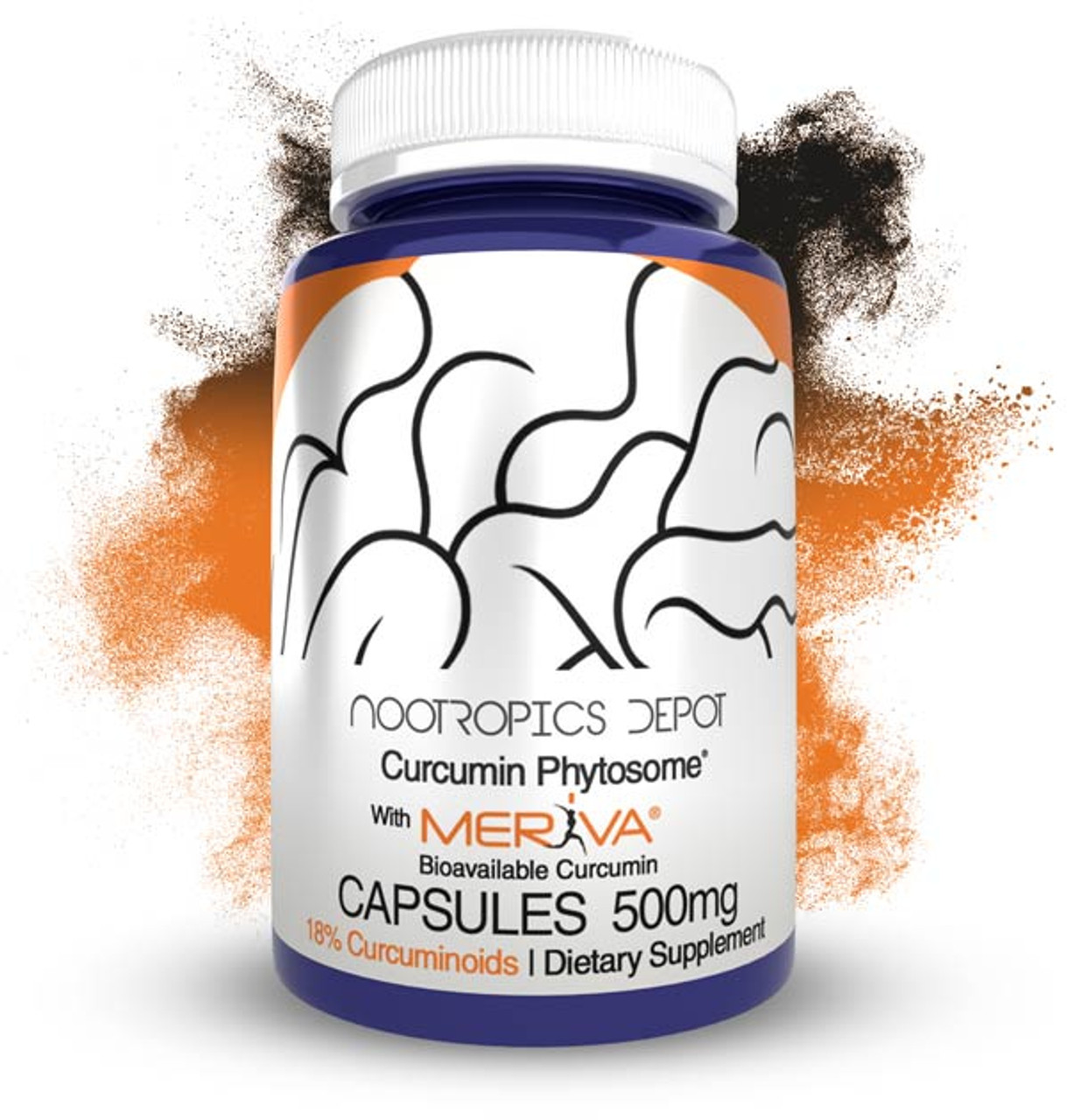
For Joint Pain: Meriva® Curcumin Phytosome
Meriva has the deepest clinical trial record for joint pain specifically — the Belcaro 2010 trial (PMID 20657536) ran 8 months and demonstrated WOMAC score improvements that standard curcumin had failed to match. The phospholipid matrix solves the bioavailability problem that defeats most turmeric supplements for pain.
- ✓ 20+ clinical trials on this specific formulation
- ✓ Piperine-free — safe with medications
- ✓ Phospholipid delivery proven superior to standard extract
- ✓ Patent-protected — verified identity and standardisation
Also see Robert’s full curated pain management picks on Benable — Best Curcumin Supplements 2026.
? Pain Type Deep Dives — Full Evidence Guides
- Turmeric for Arthritis — OA and RA clinical trial breakdown: Kuptniratsaikul, Shep, Belcaro, Chandran
- Turmeric for Gout — NLRP3 inflammasome, XO inhibition, uric acid mechanism
- TurmeriCBD for Neuropathy — The dedicated nerve pain formula and its evidence
- CBD + Turmeric for Pain — Dual-pathway protocol for chronic and neuropathic pain
- Joint Restore Gummies — Boswellia + CBD formulation for joint recovery
- Turmeric for Inflammation — NF-κB and COX-2 mechanism in detail
- Turmeric for Stress & Depression — The cortisol-inflammation-pain cycle
- What Is Meriva Curcumin? — The joint-specialist formulation explained
- BCM-95® Benefits — Piperine-free high-absorption alternative
- How to Choose a Turmeric Supplement — The 7-factor framework applied to pain
- Turmeric Side Effects — Safety, piperine interactions, and pre-surgery protocol
- What Is Turmeric Good For? — Complete health applications hub