Turmeric for Gout 2026: Does Curcumin Actually Lower Uric Acid and Kill the Pain?
Medical Disclaimer: The information on this site is not intended to be a substitute for professional medical advice, diagnosis, or treatment. All content, including text, graphics, images, and information, is for general information purposes only. Gout is a medical condition — please consult with a licensed healthcare professional before starting any new supplement regimen or making changes to prescribed medication.
⚡ Quick Answer: Can Turmeric Help with Gout?
Yes — with important caveats. Curcumin, turmeric’s active compound, targets gout through two distinct mechanisms: it powerfully suppresses the inflammatory cascade that causes acute flare pain, and preliminary research suggests it may help inhibit xanthine oxidase — the enzyme responsible for uric acid production. It won’t replace allopurinol for chronic hyperuricemia management, but as an anti-inflammatory support during flares and a long-term uric acid management tool, the evidence is genuinely promising.
- Best for: Acute flare pain relief, ongoing inflammation reduction, joint protection between flares
- Key formulation: Meriva® (phosphatidylcholine-bound) — best joint bioavailability evidence
- Pairs well with: Low-purine diet, adequate hydration, tart cherry, vitamin C
 I’ve spent over seven years researching and personally testing turmeric and curcumin formulations. I’ve got a chronic ankle injury from years ago that still flares up — so I know what it feels like when inflammation decides to ruin your week. I’ve tested over 50 different anti-inflammatory formulas to separate the science from the marketing noise. This review draws on peer-reviewed research, my own experience, and real-world patterns I’ve seen across hundreds of supplement reviews. For verifiable credentials, see my testing protocol and about page.
What Is Gout and Why Is It So Debilitating?
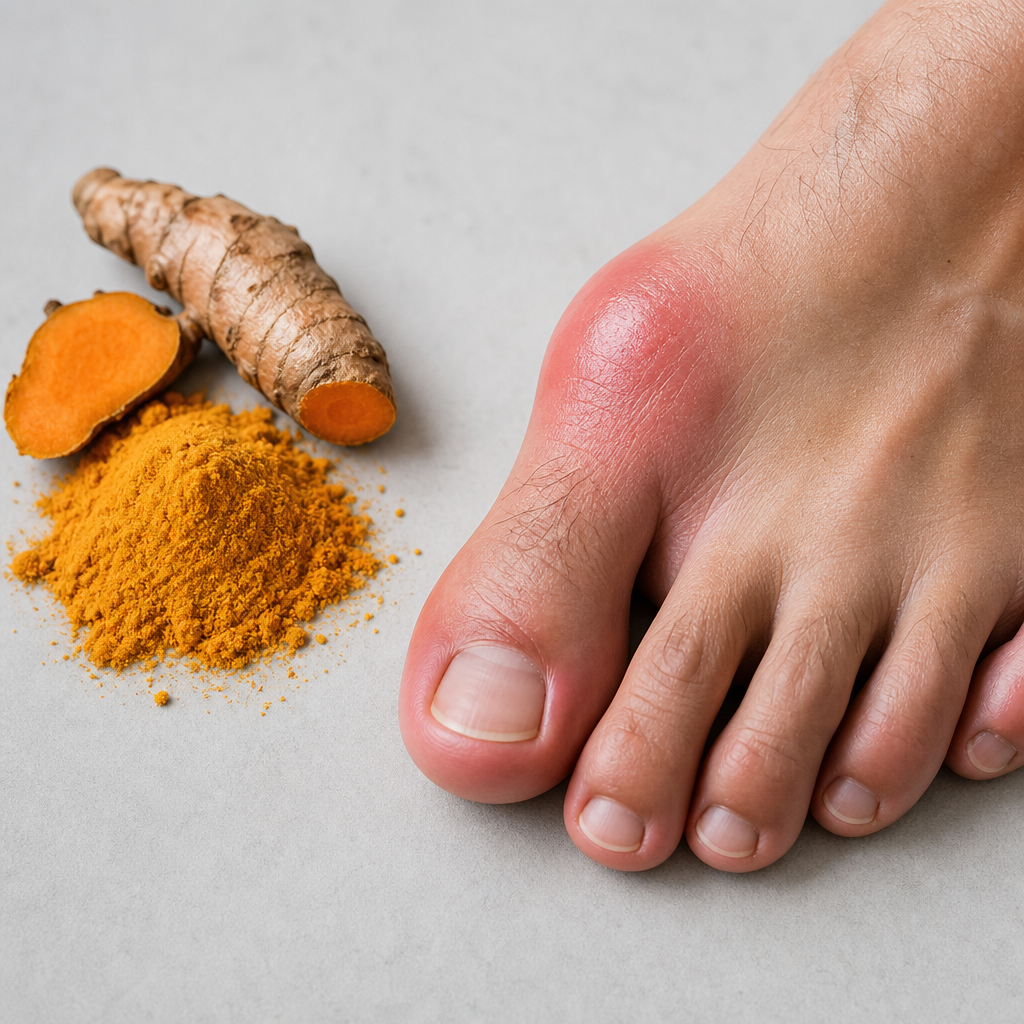
Gout is a form of inflammatory arthritis caused by hyperuricemia — chronically elevated uric acid in the blood. When uric acid levels exceed the body’s ability to keep it dissolved, it crystallises as monosodium urate (MSU) crystals that deposit in joint spaces, most notoriously the first metatarsophalangeal joint (the big toe). The result? Sudden, excruciating pain that wakes you at 3am, swelling that makes the lightest touch unbearable, and the kind of immobility that genuinely disrupts life.
Gout used to be called the “disease of kings” because it was associated with rich food and alcohol. That reputation is only half-deserved — the real drivers are genetics (variants in the SLC2A9 and ABCG2 urate transporter genes), fructose consumption, renal urate clearance, and dietary purine load. Red meat, shellfish, beer, and fructose-sweetened beverages are the main dietary triggers. Dehydration concentrates uric acid. Certain medications (diuretics, low-dose aspirin) elevate it further.
What makes gout particularly cruel is the dual nature of the problem: you need to manage acute inflammation during a flare (usually with NSAIDs, colchicine, or steroids), and separately manage chronic uric acid levels to prevent future attacks (usually with allopurinol or febuxostat). Turmeric — more specifically, curcumin — addresses both sides of this equation through distinct mechanisms.
How Turmeric Targets Gout: The Three Mechanisms
1. NF-κB Suppression — Turning Down the Inflammatory Fire
When MSU crystals lodge in a joint, your immune system recognises them as foreign invaders and triggers an acute inflammatory response. Neutrophils flood the joint, activating NLRP3 inflammasome pathways that produce IL-1β and TNF-α — the cytokines responsible for the heat, redness, swelling, and pain of a gout flare.
Curcumin is one of the most studied natural NF-κB inhibitors in existence. NF-κB is the master transcription factor that switches on inflammatory gene expression, including COX-2 (the same enzyme targeted by ibuprofen and naproxen). By blocking NF-κB activation and directly inhibiting COX-2, curcumin suppresses the same inflammatory pathways that NSAIDs target — but without the gastric and cardiovascular side effects associated with long-term NSAID use. A comprehensive 2017 review by Kunnumakkara et al. (PMC6093621) documented curcumin’s pleiotropic anti-inflammatory effects across multiple inflammatory conditions, including arthritis.
2. Xanthine Oxidase Inhibition — Targeting the Uric Acid Source
This is where turmeric’s potential really gets interesting for gout specifically. Xanthine oxidase is the enzyme that catalyses the final steps of purine metabolism, converting hypoxanthine → xanthine → uric acid. Allopurinol, the most commonly prescribed gout medication, works by inhibiting this enzyme. Curcumin has been shown in cell and animal model studies to inhibit xanthine oxidase activity — essentially working through a similar mechanism to allopurinol, though with far lower potency at standard supplement doses.
This doesn’t mean you should swap allopurinol for turmeric — it doesn’t. But it does mean that for people with mildly elevated uric acid, or as a complement to pharmaceutical management, curcumin may provide meaningful support in reducing uric acid production at the source.
3. Antioxidant Joint Protection Between Flares
Gout damages joints not just during acute attacks but over time. Repeated inflammatory episodes generate oxidative stress that degrades cartilage and synovial tissue. Curcumin is a potent free-radical scavenger and upregulates the body’s own antioxidant enzymes (superoxide dismutase, glutathione peroxidase). Between flares, consistent curcumin supplementation may help protect joint integrity — functioning similarly to how it performs in osteoarthritis models.
What Does the Research Actually Show?
A 2019 study specifically examining curcumin in gout-related inflammation (published in PMC, ref: PMC6359362) demonstrated meaningful reductions in pain and swelling markers in patients supplementing with curcumin. While the gout-specific trial base is thinner than for osteoarthritis, the mechanism data is solid — and the OA evidence translates well given the shared inflammatory pathways.
For joint-specific benefits, the strongest curcumin evidence comes from arthritis trials:
- Shep et al. 2019 (PMID 30712937) — Curcumin (500mg/day) performed comparably to diclofenac (50mg/day) for knee osteoarthritis pain and function, with significantly fewer gastrointestinal side effects. This head-to-head comparison with an NSAID is significant for gout sufferers who want to reduce NSAID reliance.
- Belcaro et al. 2010 (PMID 20657536) — Meriva® (a phosphatidylcholine-bound curcumin formulation) showed significant reductions in joint pain, stiffness, and WOMAC scores over 8 months in an OA trial. Meriva’s superior bioavailability is particularly relevant for joint-targeting applications.
- Daily et al. 2016 (PMID 27533649) — A systematic review and meta-analysis of curcumin for arthritis concluded it significantly improves pain and inflammation scores, with an acceptable safety profile.
? Bottom Line on the Evidence: The anti-inflammatory evidence for curcumin in joint conditions is robust. Gout-specific trials are limited but mechanistically consistent. The xanthine oxidase inhibition data is primarily preclinical. As a complementary approach alongside medical management, turmeric is evidence-supported. As a standalone replacement for prescribed gout medication — it is not.
Best Turmeric Formulations for Gout (Not All Curcumin Is Equal)
Standard turmeric powder has poor bioavailability — less than 1% of raw curcumin is absorbed intact. For a full breakdown of all formulations, see our turmeric vs curcumin formulations guide. For gout, where you want curcumin reaching inflamed joint tissue, formulation matters enormously.
? Meriva® — Best for Joints
Meriva® is a patented curcumin-phosphatidylcholine complex that has been specifically studied in joint applications (the Belcaro 2010 OA trial, PMID 20657536, used Meriva). The phosphatidylcholine binding dramatically improves absorption and increases the proportion of curcumin metabolites that reach joint tissue. If your primary goal is joint-targeted gout support, Meriva-containing supplements are my first recommendation. Look for “Meriva®” explicitly on the label — not generic “phytosome” claims.
? Turmeric 3D by Organixx — Best All-Rounder
For a more accessible daily anti-inflammatory option, Turmeric 3D by Organixx is my go-to general recommendation. It’s USDA organic, uses a fermented turmeric process that improves bioavailability without piperine (relevant for people on certain medications), and includes KSM-66 ashwagandha and Vitamin D3 for broader inflammatory support. It won’t have the joint-specific clinical evidence that Meriva does, but for people wanting solid daily curcumin support with clean ingredients, it delivers.
My Recommended Pick for Gout Support
Turmeric 3D by Organixx — USDA organic, fermented, piperine-free, with KSM-66 and Vitamin D3
? Compare All My Top-Rated Curcumin Picks: I keep a regularly updated list at Benable — Best Curcumin Supplements for Inflammation in 2026. Includes Meriva-based options, Turmeric 3D, and others that have earned a genuine recommendation.
Bioavailability: Getting Turmeric Into Your Joints
Whatever formulation you choose, here’s how to maximise what actually reaches your joints:
- Take with fat: Curcumin is fat-soluble. A meal containing healthy fats (avocado, olive oil, coconut milk) significantly increases absorption for non-formulated turmeric.
- Consider piperine — carefully: Black pepper extract (piperine) increases curcumin bioavailability by up to 2000% by inhibiting intestinal glucuronidation. However, piperine also significantly increases the bioavailability of many medications including blood thinners, so check with your doctor if you’re on prescription drugs.
- Choose enhanced formulations: Meriva® (phosphatidylcholine), BCM-95® (turmeric essential oil blend), CurcuWin® (water-dispersible), and Longvida® (SLCP technology) all outperform standard curcumin without needing piperine.
- Consistency over dose: Curcumin’s anti-inflammatory effects build over time. Daily consistent supplementation (500–1500mg standardised extract/day) produces better results than occasional high doses.
The Gout Diet: What You Need to Cut Alongside Turmeric
Turmeric is a powerful support tool, but it won’t override a high-purine diet. Managing what you eat remains the foundation of long-term gout control:
| High Trigger (Reduce or Avoid) | Protective Foods (Increase) |
|---|---|
| Red meat (beef, lamb, pork) | Tart cherries / cherry juice (lowers uric acid) |
| Shellfish (prawns, mussels, scallops) | Coffee (associated with lower uric acid in studies) |
| Beer and spirits (especially beer) | Vitamin C (increases renal urate excretion) |
| Fructose-sweetened drinks (fizzy drinks, fruit juice) | Dairy products (low-fat milk/yoghurt reduce gout risk) |
| Organ meats (liver, kidney) | Water (2–3L/day dilutes and helps excrete uric acid) |
| Anchovies, sardines, mackerel | Turmeric/curcumin (anti-inflammatory, possible XO inhibition) |
Note: dietary purines account for about 30% of uric acid production — the rest is endogenous. This is why diet alone often isn’t enough for people with genetic predisposition to hyperuricemia, and why medication is sometimes unavoidable.
Turmeric vs NSAIDs for Gout Inflammation: An Honest Comparison
| Factor | NSAIDs (Indomethacin, Naproxen) | Curcumin (Turmeric) |
|---|---|---|
| Speed of action | ✅ Fast (hours) | ❌ Slower (days–weeks for full effect) |
| Acute flare relief | ✅ Strong | ? Moderate (adjunct role) |
| GI side effects | ❌ Common (gastric ulceration risk with long-term use) | ✅ Rare at supplement doses (may help gut health) |
| Cardiovascular risk | ❌ Elevated with prolonged use | ✅ Cardioprotective in studies |
| Uric acid reduction | ❌ None | ? Possible (via XO inhibition — preclinical evidence) |
| Long-term joint protection | ❌ No protective effect | ✅ Antioxidant cartilage protection |
| Drug interactions | ❌ Many (blood thinners, lithium, methotrexate) | ? Some (blood thinners, piperine formulations) |
My take: For a severe acute flare, NSAIDs or colchicine are the right immediate tool — there’s no shame in using them, and denying yourself effective pain relief to “go natural” is not wisdom. But for ongoing, daily anti-inflammatory support to reduce flare frequency and protect your joints long-term, turmeric is genuinely complementary and meaningfully safer than years of NSAID use.
Turmeric for Gout — Frequently Asked Questions
Can turmeric permanently cure gout?
No. Gout is driven by genetic predisposition to hyperuricemia and dietary/lifestyle factors. Turmeric can reduce inflammation, potentially inhibit uric acid production to a degree, and reduce flare frequency — but it doesn’t fix the underlying urate transporter gene variants responsible for chronic hyperuricemia in genetically predisposed people. Long-term, it’s a powerful complementary tool, not a cure.
How long before turmeric works for gout pain?
For acute flare pain, turmeric acts more slowly than NSAIDs — expect gradual relief over 24–72 hours rather than hours. For long-term anti-inflammatory effects and potential flare frequency reduction, consistent daily use for 4–8 weeks is needed before you can fairly assess results. Many users report meaningful improvement in 3–4 weeks of daily supplementation.
What dose of turmeric should I take for gout?
Most clinical trials showing benefit used 500mg–1500mg of standardised curcumin extract daily (not raw turmeric powder). Raw turmeric powder contains only 2–5% curcumin by weight, so a teaspoon of powder provides roughly 100–200mg — far less than trial doses. For gout support, a quality curcumin extract at 500–1000mg/day is a reasonable starting point.
Is turmeric safe to take with allopurinol or colchicine?
Generally yes, but check with your prescribing doctor (also see our guide to turmeric side effects and drug interactions). Curcumin at supplement doses (without high-dose piperine) does not have documented significant interactions with allopurinol or colchicine. However, piperine-containing formulations can increase drug bioavailability unpredictably. If you’re on blood thinners (warfarin, aspirin), choose piperine-free formulations like Meriva® or Turmeric 3D.
Does turmeric actually lower uric acid?
Preclinical (cell and animal model) evidence suggests curcumin can inhibit xanthine oxidase — the enzyme that produces uric acid. Human clinical trials specifically measuring uric acid reduction with curcumin are limited. The anti-inflammatory mechanism is far better established. For significant uric acid reduction, allopurinol or febuxostat remain the evidence-backed choices, with curcumin as a potential complementary support.
Can I take turmeric if I’m on blood pressure medication?
Curcumin at typical supplement doses is generally safe alongside most antihypertensives and may even be cardioprotective. The main caution is with piperine-containing formulations, which can increase drug bioavailability. If you’re on complex medication regimens, choose a piperine-free formulation and check with your doctor.
What foods should I combine with turmeric for gout?
Build a broader anti-gout diet: low-purine foods (vegetables, eggs, low-fat dairy), tart cherry juice (shown to lower serum uric acid), adequate water intake (2–3L/day), and vitamin C-rich foods (increases renal urate excretion). A healthy fat at each meal helps curcumin absorption if you’re not using an enhanced formulation.
Which is better for gout: turmeric tea or supplements?
Supplements, reliably. A cup of turmeric tea provides perhaps 50–150mg of curcumin with poor absorption. A quality curcumin extract supplement delivers 500–1000mg of standardised, bioavailability-enhanced curcumin. Tea is pleasant and has anti-inflammatory properties from other turmeric compounds, but for therapeutic gout support, standardised supplements are far more effective. Enjoy the tea as well — just don’t rely on it alone.
Can turmeric help prevent gout flares?
Potentially yes, and this is one of the more promising use cases. By reducing baseline systemic inflammation and potentially inhibiting xanthine oxidase, regular curcumin supplementation may lower the frequency and severity of flares over time. Many users who take daily curcumin for other inflammatory conditions report fewer joint flare-ups as a secondary benefit. This is consistent with the anti-inflammatory mechanisms and the long-term OA trial results.
Hello Rob, thanks for sharing this useful information. Natural means of treating some health issues have been neglected and we have put all our hopes on drugs which comes very expensive and in form other situation with side effects. Tumeric is one spice i have used in the past and can attest to how effective it can be to the human health. Although this is my first time learning of its importance as to treating gout. I’ll share on my social media so others can benefit from it. Best regards
Hi Benson. Thanks for stopping to testify for Turmeric, Curcumin and Gout has not been a heavily reported benefit from Turmeric. But I do feel it is a common sense case, when the MAIN and Primary Effect is Inflammation it is not to be taken as a surprise:). I Thank for sharing! I hope it will help a friend, and a friends friend, Mom, Dad, Grandparent and more..
All the best
Rob