Turmeric Adulteration: The Hidden Truth About What’s In Your Supplement (2026)
Consumer Safety Disclosure: This page discusses documented public health risks associated with adulterated turmeric products. Information is drawn from peer-reviewed research, public health investigations, and the author’s personal experience. This is not medical advice — if you believe you have experienced adverse effects from a supplement, consult a healthcare professional and report it to your national food safety authority.
⚠️ Quick Answer: Is Adulterated Turmeric a Real Risk?
Yes — and it is far more widespread than the supplement industry wants you to know. Documented adulterants found in commercial turmeric include lead chromate (an industrial yellow pigment used to boost colour), synthetic curcumin (a petrochemical-derived imposter with no Carbon-14), banned synthetic dyes, chalk, starch fillers, and heavy metals from unregulated processing. A landmark Harvard-linked study (Forsyth et al. 2019, PMID 31613663) traced epidemic childhood lead poisoning in Bangladesh directly to lead chromate added to turmeric for colour enhancement. This is not a fringe concern — it is a documented public health crisis that continues because accountability in the global spice supply chain is weak, enforcement is inconsistent, and profit margins reward deception.
- Most at risk: Anyone buying cheap, unbranded, or uncertified turmeric powder or supplements
- How to protect yourself: Third-party tested, certified organic, from brands with transparent supply chains
- The bottom line: Your turmeric is only as good as the integrity behind it
? The 60-Second Turmeric Quality Test
Before reading further — run this quick self-check on your current turmeric or supplement:
- ☐ The urine test: Did your urine turn bright yellow within 30–60 minutes of taking it?
- ☐ The rash test: Any unexplained skin reactions since starting it?
- ☐ The ache test: Diffuse organ discomfort — kidney area, liver region — after regular use?
- ☐ The label test: Does it list a COA, certifier, and country of origin for the raw material?
- ☐ The price test: Is it suspiciously cheap compared to certified organic alternatives?
If you ticked any of the first three boxes — stop taking the product and read this page. If the last two are blank — you don’t have enough information to assess what you’re taking.
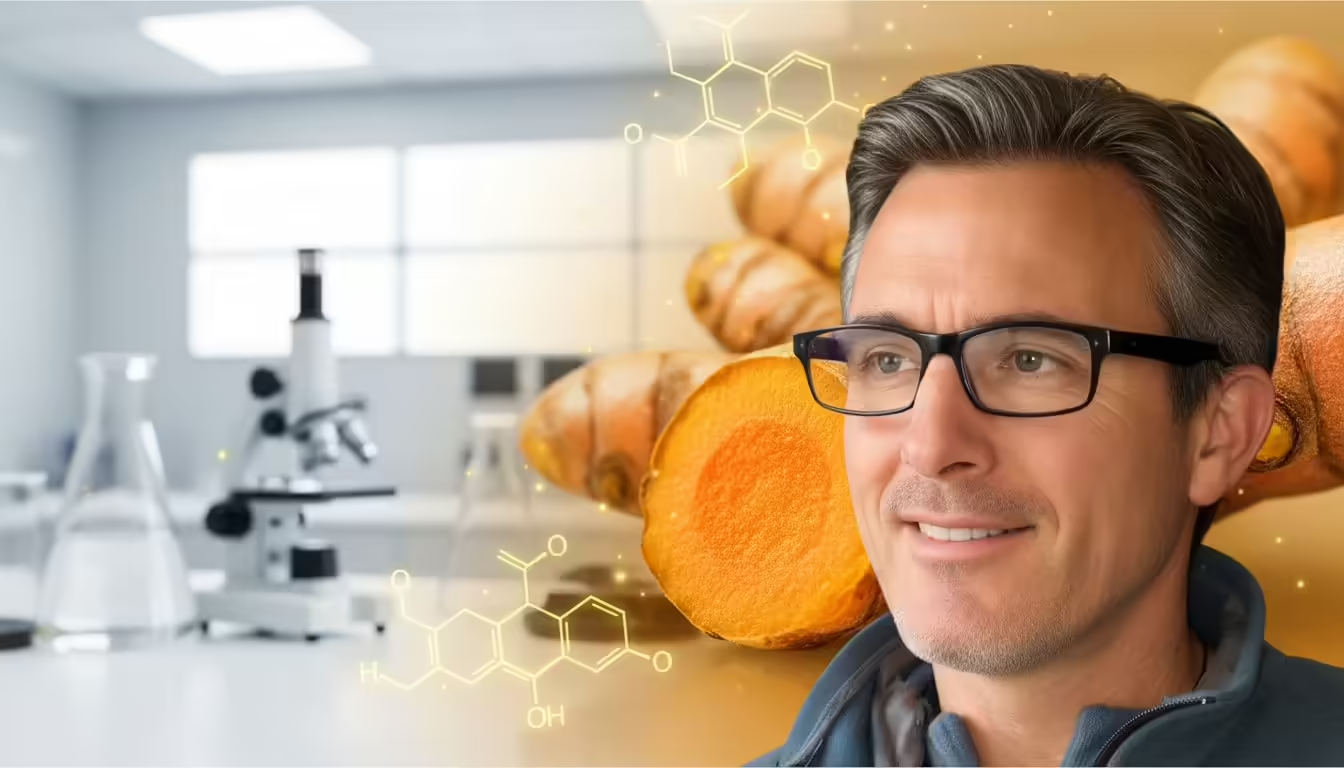 I’m writing this from personal experience that I don’t talk about lightly. I have taken supplements and urinated bright yellow within 30 minutes — a clear signal that synthetic colorants are passing straight through your body rather than delivering any therapeutic benefit. I have experienced organ aches that I now understand were consistent with heavy metal exposure from contaminated turmeric products. I have had unexplained rashes that resolved only after switching to certified, third-party tested formulations. These aren’t abstract risks. They happened to me. And I suspect they have happened to many readers of this site who attributed their symptoms to something else entirely. This page is the one I wish had existed before I learned these lessons. See my testing protocol and about page.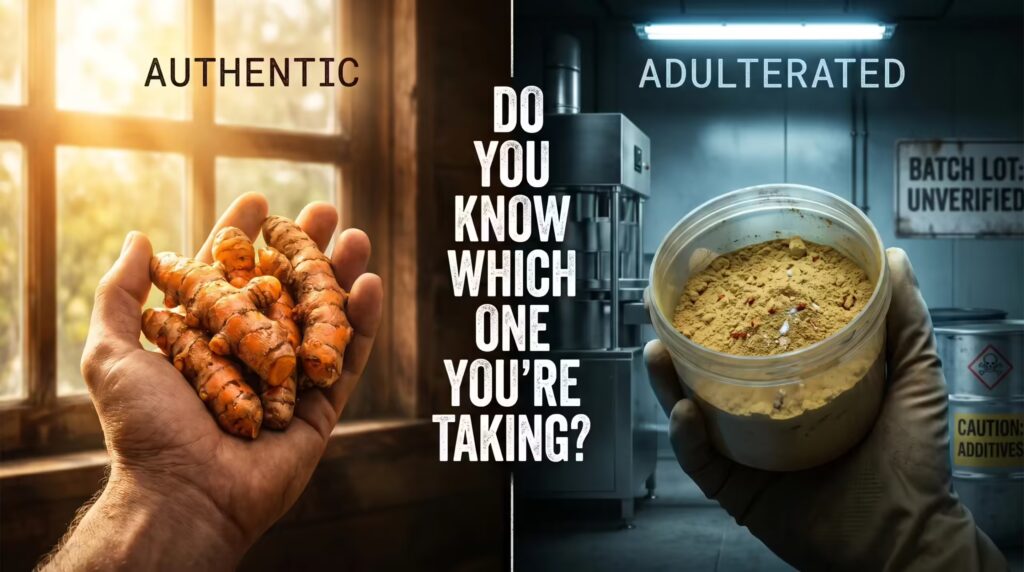
Authentic vs adulterated — two products that look identical on shelves. One is therapeutic. One may be toxic.
How We Got Here: The History of Turmeric and the Arrival of Greed
Turmeric’s story begins thousands of years before the supplement industry discovered it. In Ayurvedic medicine, it was revered as haridra — explored in depth in our history of turmeric guide — the golden healer — prepared with reverence from locally grown roots whose provenance was known intimately. In traditional Asian communities, turmeric was a household staple: grown, dried, ground, and used in quantities that assumed its authenticity without question.
Then came western adoption. The 1990s and 2000s brought a surge of interest in natural anti-inflammatory compounds as chronic disease rates climbed in developed countries. Word spread — first through natural health communities, then through popular media, then through peer-reviewed research as scientists confirmed what traditional cultures had known for centuries — the full scope of turmeric’s validated benefits spans inflammation, brain health, metabolic function, and beyond. Curcumin, turmeric’s primary active compound, was demonstrably anti-inflammatory, antioxidant, and neuroprotective. The science was real. The plant was extraordinary.
The market that followed was inevitable — and the problems that followed the market were predictable.
By the 2010s, global demand for turmeric had grown dramatically. Supply chains lengthened and became opaque. Turmeric moved from local farms to international commodity traders to processing facilities to contract manufacturers to supplement brands — with quality checks diminishing at each step. The incentive structure was simple: bright yellow colour signals quality to consumers; lead chromate is cheap and intensely yellow; testing is expensive and not legally mandated in most markets.
The stage was set.
What Is Actually Being Added to Turmeric — The Documented Adulterants
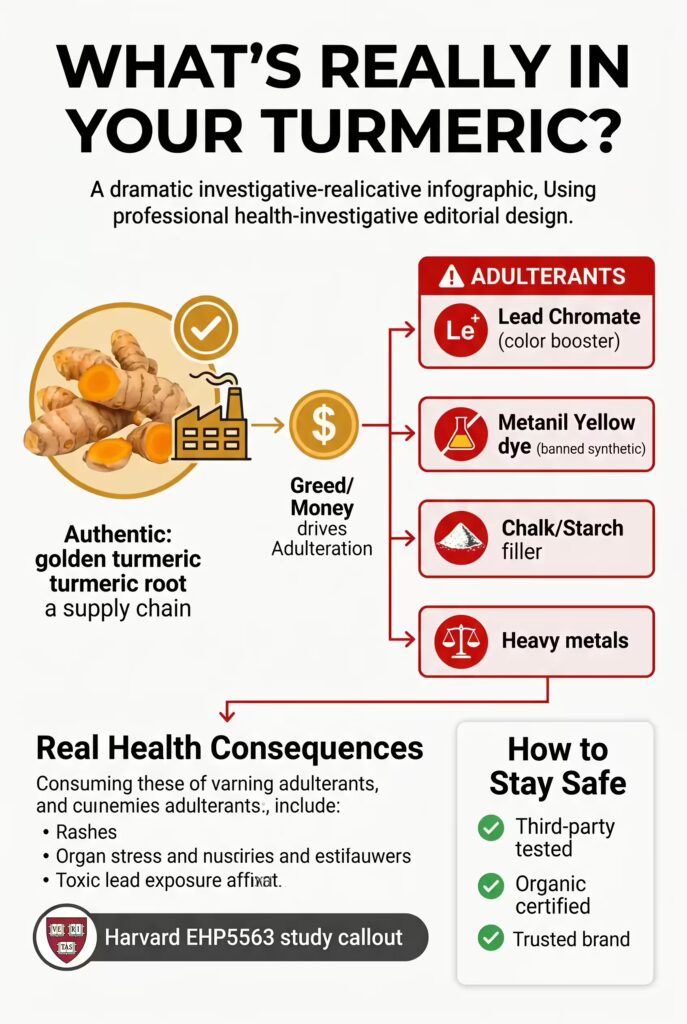
The documented adulterants found in commercial turmeric — and the real health consequences of each. Source: Forsyth et al. 2019, Environmental Health Perspectives (PMID 31613663)
Lead Chromate — The Most Dangerous Adulterant
Lead chromate (PbCrO₄) is an industrial yellow pigment used in paints and road markings. It is toxic, carcinogenic, and has no legitimate place in food. It is also cheap, brilliantly yellow, and virtually undetectable to the naked eye when mixed into turmeric powder.
The Harvard-linked study by Forsyth and colleagues (2019, PMID 31613663) published in Environmental Health Perspectives documented a systematic practice of adding lead chromate to turmeric in Bangladesh during the milling process. Investigators traced this directly to epidemic blood lead levels in both the local population and in consumers of Bangladeshi-sourced turmeric globally. The study estimated this practice had been ongoing for decades, affecting millions of people across supply chains reaching North America, Europe, and Australia.
Lead has no safe exposure level — and its interaction with supplements is covered in our turmeric safety guide. Its effects are cumulative and irreversible — neurological damage, kidney impairment, cardiovascular disease, reproductive harm. In children, even low-level chronic exposure causes measurable cognitive impairment. The adults experiencing “organ aches” after turmeric supplementation — as I did — may be experiencing the early signals of lead accumulation from contaminated product.
Metanil Yellow and Other Synthetic Dyes
Metanil yellow (acid yellow 36) is a banned synthetic azo dye used in some markets to intensify the yellow colour of turmeric. It is carcinogenic in animal studies and has been classified as a potential human carcinogen. It is banned in food applications across the EU, US, and many other jurisdictions — yet it continues to appear in turmeric samples tested in both retail and bulk markets.
Other synthetic dyes documented in adulterated turmeric samples include Sudan IV (a recognised carcinogen) and various unlabelled industrial colorants. The presence of synthetic dyes explains the phenomenon of bright yellow urine within 30–60 minutes of consumption — your kidneys are rapidly excreting a water-soluble synthetic compound rather than absorbing a fat-soluble therapeutic one. If your urine turns strongly yellow shortly after taking turmeric powder (see Robert’s testing protocol for how to assess this properly), that is a warning signal, not a sign of efficacy.
Starch and Chalk Fillers
Less immediately toxic but economically significant: bulking agents including rice starch, cassava starch, wheat flour, and calcium carbonate (chalk) are routinely detected in adulterated turmeric samples. These reduce the effective curcumin content while maintaining the visual appearance and weight of the product.
A product labelled as containing 95% curcuminoids — and understanding why the difference between turmeric and curcumin matters to this calculation that is 40% starch by weight is delivering less than half the stated active ingredient — at a hidden cost to the consumer who trusts the label.
For people with coeliac disease or wheat sensitivity, undeclared wheat flour in a “pure turmeric” product is a direct health risk. For everyone else, it is simply fraud.
Heavy Metals from Contaminated Soil and Processing
Beyond deliberate adulteration, contamination can enter the supply chain through environmental sources: turmeric grown in soil contaminated with industrial runoff, processed using equipment with leaching metal components, or stored in containers with inadequate liners.
Arsenic, cadmium, mercury, and lead can all accumulate in turmeric from these sources. The cumulative impact of regular supplementation with heavily contaminated product — taken daily over months or years by consumers who believe they are doing something good for their health — is a slow and invisible harm.
“Zero subjects in the curcumin group progressed to full type 2 diabetes over 9 months — versus 16.4% in the placebo group. But only if the curcumin was real.”
The clinical evidence for turmeric is extraordinary. The NF-κB mechanism is well-established. None of it matters if the product in your hand is lead chromate and chalk.
The Accountability Gap — Why This Continues
The uncomfortable truth is that the global turmeric supply chain operates with limited accountability at the points where adulteration occurs.
In the countries of origin, regulatory enforcement of food safety standards is inconsistent. In the importing countries, testing regimes focus predominantly on microbiological safety and pesticide residues, with heavy metal and adulterant screening being voluntary rather than mandatory for supplement manufacturers. The supplement industry in most markets is not required to prove what it claims — it is simply required to not actively lie on the label, a standard that adulteration by definition still manages to circumvent.
Third-party testing exists and works. The factors to consider when selecting a supplement guide covers exactly what to ask for. Certifications like NSF International, USP, and Informed Sport provide meaningful independent verification. Certified organic status, while not a guarantee of curcumin potency, significantly reduces the probability of deliberate synthetic adulteration. But these verification mechanisms are voluntary — and products that carry them are invariably more expensive than the unverified alternatives that dominate the price-driven end of the market.
The consumer who buys the cheapest turmeric on the shelf is subsidising their own risk.
?️ Official FDA Position on Turmeric Adulteration
The US Food & Drug Administration has formally classified lead-based dye adulteration of turmeric as Economically Motivated Adulteration (food fraud):
“Lead-based dyes and other industrial dyes that can cause adverse health problems such as cancer have been found in spices such as chili powder, turmeric, and cumin.”
In a 2024 press statement on spice safety, the FDA further noted:
“Lead can also be present through the intentional addition to spices (e.g., turmeric, paprika, and cinnamon powder), likely for economic gain.”
Despite this official position, testing and certification remain voluntary for supplement manufacturers in most jurisdictions. The absence of mandatory screening is the accountability gap this page addresses.
How to Protect Yourself — Robert’s Testing Protocol
✅ What to Look For When Buying Turmeric or Curcumin
- Third-party testing certificate — NSF, USP, Informed Sport, or brand-published COA (Certificate of Analysis) showing heavy metal and contaminant results. If a brand won’t show you this, move on.
- Certified organic — reduces deliberate synthetic dye and pesticide risk significantly
- Named, traceable source — brands that can tell you specifically where their turmeric is grown are less likely to be pulling from the cheapest unverified commodity pool
- No unnatural colour intensity — ultra-vivid orange-yellow is a flag. High-quality curcumin extract is a muted golden-brown, not a fluorescent yellow
- Urine colour test — genuine curcumin is fat-soluble and absorbed slowly. Bright yellow urine within 30–60 minutes of taking a capsule = synthetic water-soluble colorants being excreted
- No unexplained symptoms — rashes, GI distress, or diffuse organ aches after starting a turmeric product warrant switching brand and potentially testing for heavy metal exposure
? Red Flags — When to Stop and Switch
- Urine turns bright yellow within 1 hour of taking the supplement
- Unexplained skin rashes or hives after starting supplementation
- Diffuse organ discomfort — particularly kidney area or liver region
- No Certificate of Analysis available from the brand
- Unusually cheap price — quality supply chain costs money
- No country of origin stated for the turmeric raw material
- Ingredient list shows only “turmeric” or “turmeric extract” without standardisation percentage
What Robert Uses — The Standard for Accountability
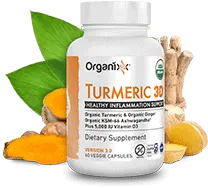
Organixx Turmeric 3D — The Accountability Standard
After the experiences described above, I rebuilt my supplement protocol around brands that could demonstrate, not just claim, quality. Organixx Turmeric 3D meets every criterion I now require:
- ✓ Certified organic — no synthetic dyes, no agricultural chemical contamination
- ✓ Third-party tested — independently verified purity and potency
- ✓ Fermented curcumin — genuine lacto-fermentation, traceable process
- ✓ Transparent brand — Organixx publishes their sourcing and testing information
- ✓ Piperine-free — no hidden drug interaction risk
- ✓ No bright yellow urine. No rashes. No organ aches. That tells you everything.
Also see Robert’s full curated trusted supplement list on Benable — Best Curcumin Supplements 2026.
You now know what to avoid. Here’s what actually passes the test.
The brands below were selected specifically against the adulteration criteria above — organic certification, third-party COA, traceable sourcing, and zero adverse reactions in Robert’s personal testing.
Formulations That Pass Robert’s Protocol
The antidote to adulteration isn’t just avoiding cheap powder — it’s choosing formulations where the delivery system, certification, and testing regime make contamination both harder to hide and commercially pointless. These four represent the accountability standard in their respective categories.
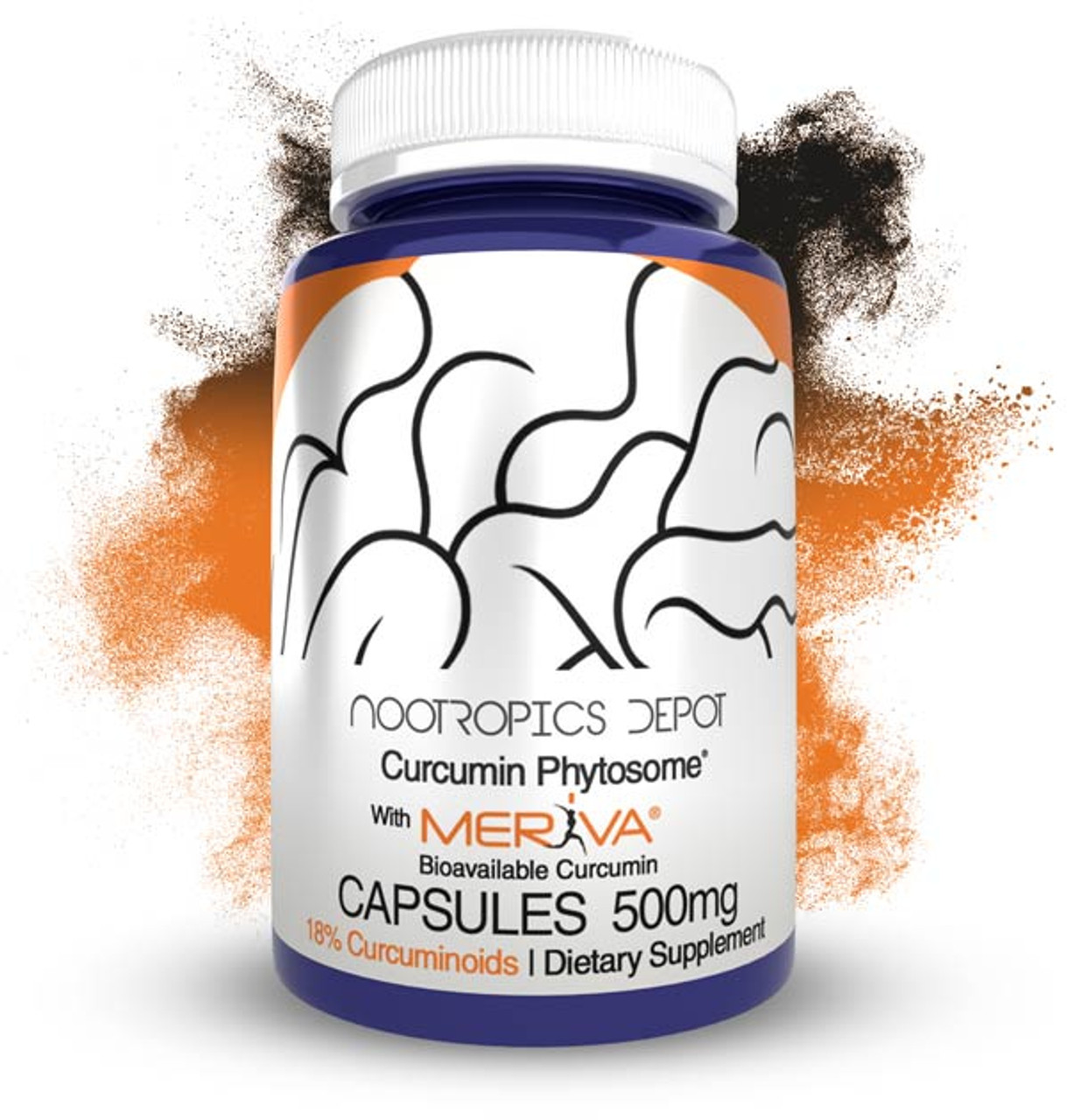
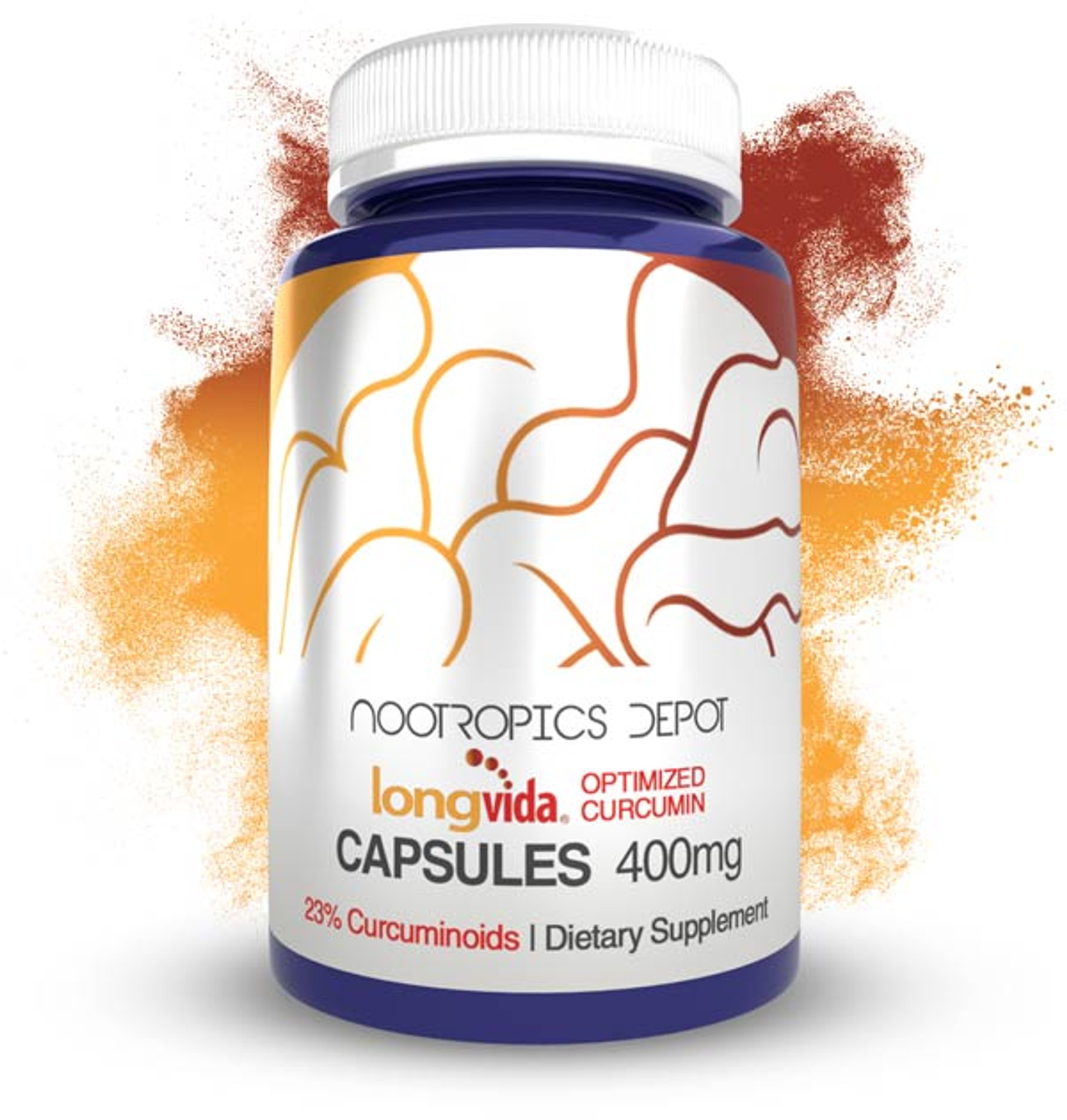
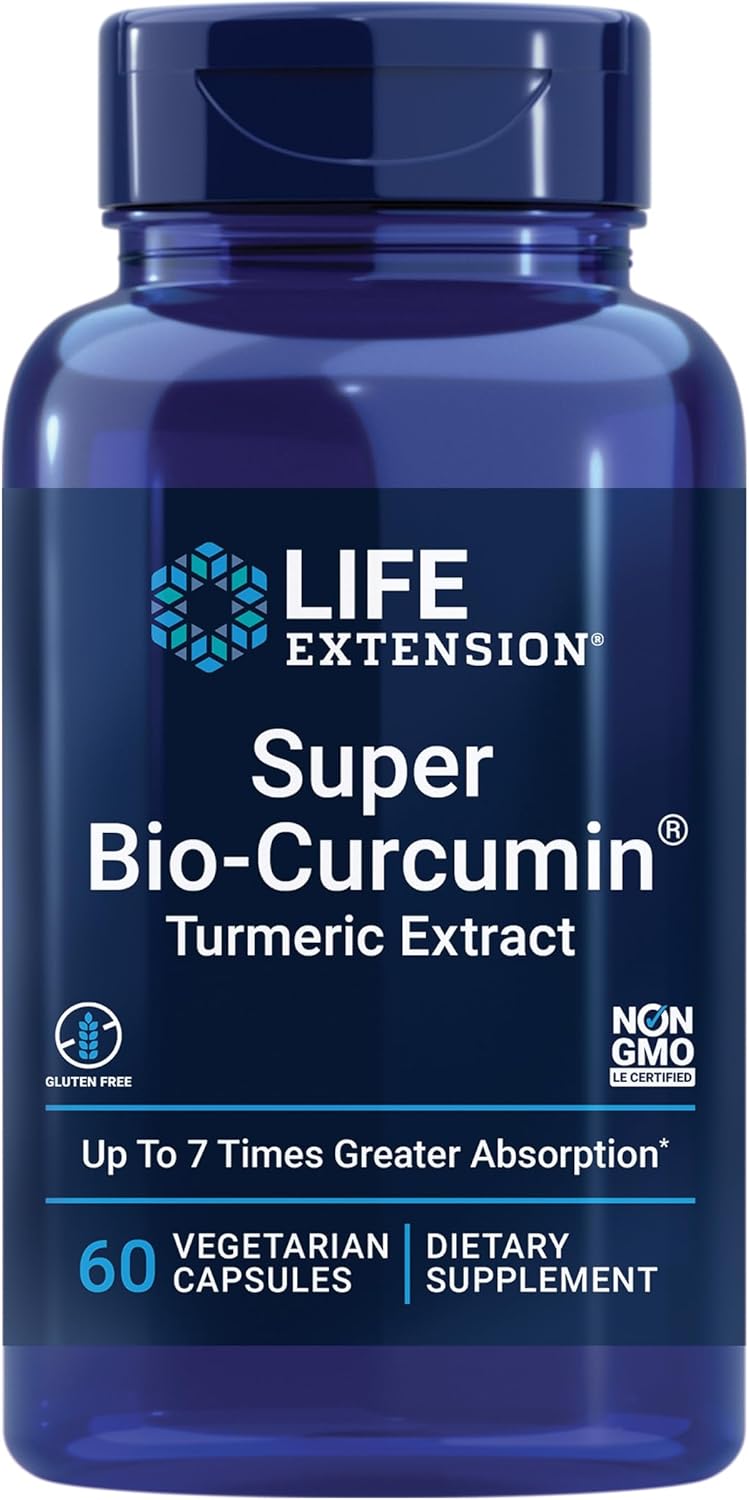
Affiliate disclosure: This site earns a small commission on some links at no extra cost to you. All recommendations reflect Robert’s genuine quality criteria above — adulteration risk was a primary consideration in every selection.
? Related Reading — Quality, Safety & What to Trust
- Turmeric Side Effects & Safety — What’s real vs what’s adulteration-related
- Turmeric vs Curcumin — Why what’s on the label rarely reflects what’s in the capsule
- Fermented Turmeric — The format most resistant to adulteration and most verifiable
- Turmeric 3D Review — The standard for organic, tested, traceable turmeric
- What Is Turmeric Good For? — The genuine health evidence — what real turmeric actually does
- Turmeric for Inflammation — Clinical evidence that adulterated product will never deliver
- Drug Interactions Guide — Contaminants add unpredictable interaction risk
Hi Robert,This was a powerful guide. I didn’t realise turmeric adulteration was such a serious global issue. I liked the way you gave clear steps for checking product safety. It’s surprising how profit can lead to such health dangers and I have seen this in movies related sports milk powder. Do you think stricter international testing laws could actually stop this kind of adulteration, or will it always depend on consumer awareness?
Really appreciate you engaging with this — it doesn’t get nearly enough attention.
Honest answer: both matter, but consumer awareness is the more reliable backstop. International testing standards have existed for years — USP, EU pharmacopoeia, ISO protocols — and adulteration still runs rampant, particularly through supply chains passing through multiple middlemen. Enforcement is patchy, jurisdiction gaps are real, and the economic incentive to cut corners is enormous.
Your sports milk powder comparison is exactly right — we’ve seen regulatory failures even in highly-visible categories with enormous public health consequences. Stricter laws would help at the margins, especially for companies in regulated markets like the US or EU where non-compliance carries real consequences. But the supply chain is long and opaque.
What actually moves the needle for consumers is knowing what to look for: COA transparency, third-party testing (not self-declared), and brands that name their raw material suppliers. The adulteration problem shrinks when enough buyers get savvy enough to ask those questions.
This article was really eye opening because many people buy supplements without thinking much about quality or possible contamination. I did not know turmeric adulteration was this common, so your explanations made the topic much easier to understand. What really caught my attention was how you explained ways consumers can protect themselves by checking ingredients and product sourcing before buying. A lot of people probably do not realize how important that is.Do you personally trust most turmeric supplements on the market today, or do you think consumers should still be very careful when choosing brands?
Hi Monica — Rob here. Really appreciate you taking the time to read this one carefully.
To your question: I don’t “blindly trust” most turmeric supplements on the market — not because turmeric is inherently dangerous, but because the supply chain incentives and the lack of mandatory testing make it far too easy for contaminated or adulterated product to slip through.
On the adulteration side, this isn’t theory. A landmark public health investigation traced widespread lead chromate adulteration in turmeric to serious lead exposure outcomes (Forsyth et al., 2019; PMID: 31613663). That’s why I’m so hardline about verification.
Here’s the practical way I think about it:
If you want the “consumer checklist” version of this, this page pairs perfectly with my guide on how to choose a turmeric supplement and the exact criteria I use in our supplement testing protocol.
Also worth reading (because a lot of people mistake contamination symptoms for “side effects”): turmeric side effects & safety.
Thanks again for asking the right question — your instincts here are solid.
Hi Robert,that was such a great read.I also linked over to your about me page and that was excellent as well.Great to see a fellow brother in Christ exposing lies and showing truth as we are commanded in Ephesians 5:11.Anyway ,I digress.Your article was interesting to me as you mentioned the lead chromate bright yellow.We were ordered to use that very same paint(bright yellow) as an undercoat on seagoing warships for a certain southern hemisphere major Navy.It was common knowledge back then(80s/90s) that paint was a possible carcinogen and lead contaminant but we were ordered to use it anyway.To read that this stuff is used as an adulterant in Tumeric supplement as well as the other rubbish elements as described is just plain evil.Youve done a great job on your website as well as the links leading from this article to peer reviewed research.Good work Robert,well done!
In Reply to William:
⚕️ Rob here—this is a profound and chilling piece of validation, William. I want to thank you for having the courage to share that experience. It is one thing for me to cite the scientific literature and Harvard-linked studies on lead chromate (PbCrO₄) as an industrial pigment used in road markings and industrial paints. It is another thing entirely to hear from a man who was ordered to apply that very substance as a toxic undercoat on seagoing warships.
You have perfectly highlighted the moral disconnect we are fighting. In the 80s and 90s, the Navy knew it was a carcinogen and a heavy metal contaminant, yet it was deemed “good enough” for steel hulls. To find out that this same industrial toxin is being used as a “color enhancer” in natural turmeric supplements taken by people for their health is, as you said, plain evil.
This is exactly why my investigation into turmeric adulteration was so personal. When profit margins reward deception, and regulatory bodies have an “accountability gap,” these toxins find their way into our bodies. Your story about “bright yellow” lead chromate paint is the ultimate warning to every reader on this site: Vivid color does not equal quality or healing; often, it equals a chemical mask.
To my fellow readers: William’s experience is the standard we must hold. This is why we demand a Certificate of Analysis (COA) for every batch, why we verify testing protocols, and why we look for the truth behind the label.
William, I am honored that you found your way to my “About” page and resonated with the mission. Knowing there are others out there who recognize the need to expose lies and stand for the truth is what keeps this site alive. God bless you for your service and for your voice—it adds a layer of undeniable authority to this conversation that science alone cannot provide.
He who has ears to hear, let them hear.