
Turmeric for Inflammation: Science, Evidence and 12 Practical Hacks (2026)
I stacked my ankle badly a few years back. Swelling like a tennis ball, doc said ten days before I’d be mobile. Four days later I was walking — not because I ignored his advice, but because I’d been drinking turmeric tea three times a day since the day it happened, alongside everything he prescribed. That was the moment I stopped being a sceptic about curcumin and inflammation and started actually reading the clinical literature. What I found was a serious body of evidence. This page is that evidence, plus everything I’ve learned about making turmeric work in practice for the 40–65 age group.
Table of Contents
- About Robert Lees
- How Curcumin Fights Inflammation — The Mechanisms
- Clinical Evidence: What the Trials Show
- Formulations: Why Delivery Determines Results
- 12 Practical Turmeric Hacks for Inflammation
- How Inflammation Affects Midlife — and Where Turmeric Helps
- My Current Recommendation
- Frequently Asked Questions
- References
About Robert Lees
I’m Robert Lees, founder of OrGainIt Health Revelations. NZ-based supplement researcher, 9+ years testing turmeric and curcumin products. My daughter Makayla was diagnosed with MS at 14 — that’s what sent me into anti-inflammatory research. My own joints have been my second classroom. No medical degree, but I read the actual studies and I check the PMIDs. See my supplement testing protocol and about page.
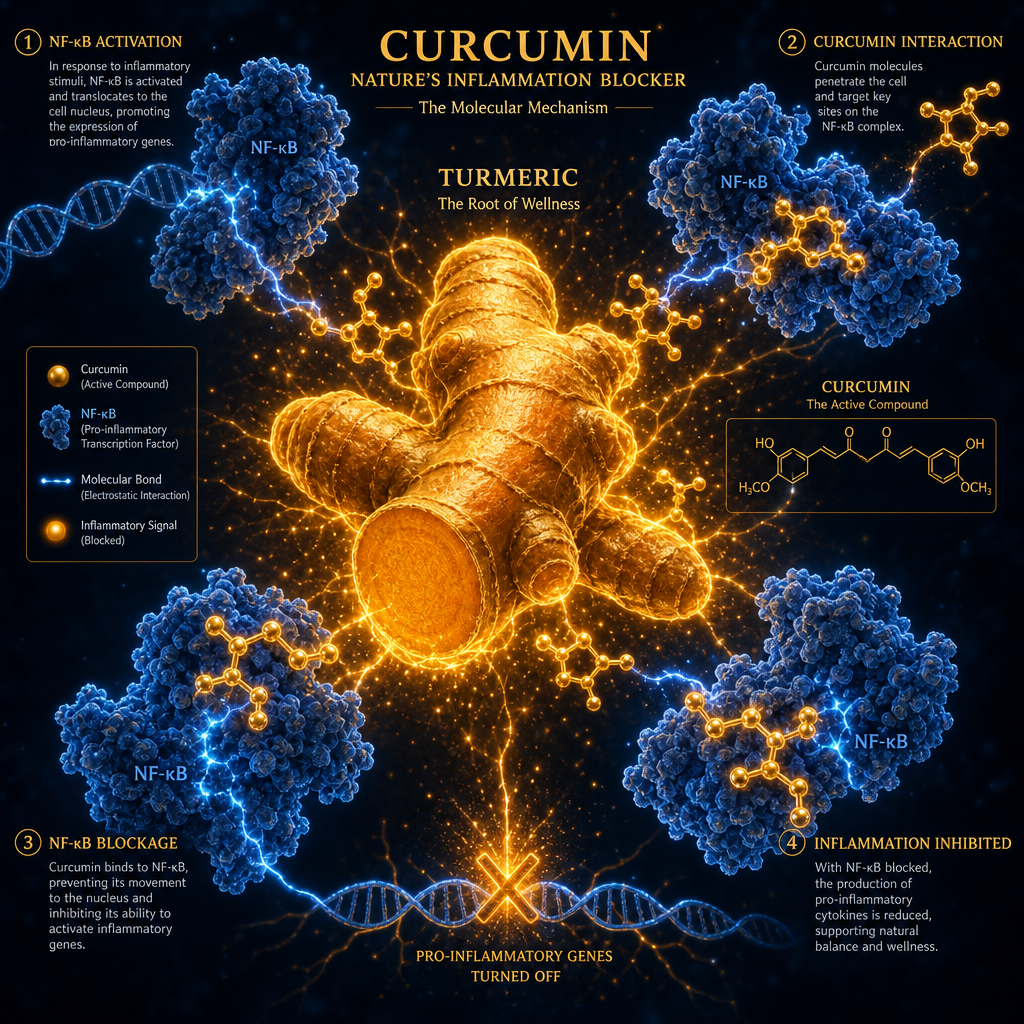
How Curcumin Fights Inflammation — The Mechanisms
Chronic inflammation — the kind that underlies joint disease, cardiovascular conditions, gut disorders, and much of the ageing process — is driven by specific molecular pathways. Curcumin acts on several of them simultaneously, which is what makes it unusually broad-spectrum as a natural anti-inflammatory. (Kunnumakkara et al., 2017, British Journal of Pharmacology, PMC6093621)
- NF-κB inhibition: Nuclear Factor kappa-B is the master regulator of inflammatory gene expression. Chronically activated in arthritis, cardiovascular disease, gut inflammation, and most age-related inflammatory conditions. Curcumin is one of the most potent natural NF-κB inhibitors identified.
- COX-2 suppression: Cyclooxygenase-2 produces prostaglandins — the compounds behind pain, swelling, and fever. Same pathway targeted by ibuprofen and diclofenac, but curcumin’s mechanism is gentler on the gut lining.
- LOX inhibition: Lipoxygenase enzymes drive leukotriene production — another inflammatory cascade relevant to asthma, skin conditions, and joint disease.
- iNOS suppression: Inducible nitric oxide synthase drives nitric oxide overproduction in chronic inflammation. Curcumin reduces iNOS expression, limiting this pathway.
- Cytokine modulation: Curcumin reduces TNF-α, IL-1β, and IL-6 — the primary pro-inflammatory cytokines elevated in arthritis, IBD, metabolic syndrome, and other chronic inflammatory conditions.
- Antioxidant activity: Oxidative stress and inflammation amplify each other. Curcumin is both a direct free radical scavenger and an inducer of the body’s own antioxidant enzymes.
What makes this genuinely impressive from a pharmacological standpoint is the multi-target action — most anti-inflammatory drugs block one pathway. Curcumin addresses several simultaneously, which may explain why it shows benefit across such a range of inflammatory conditions.
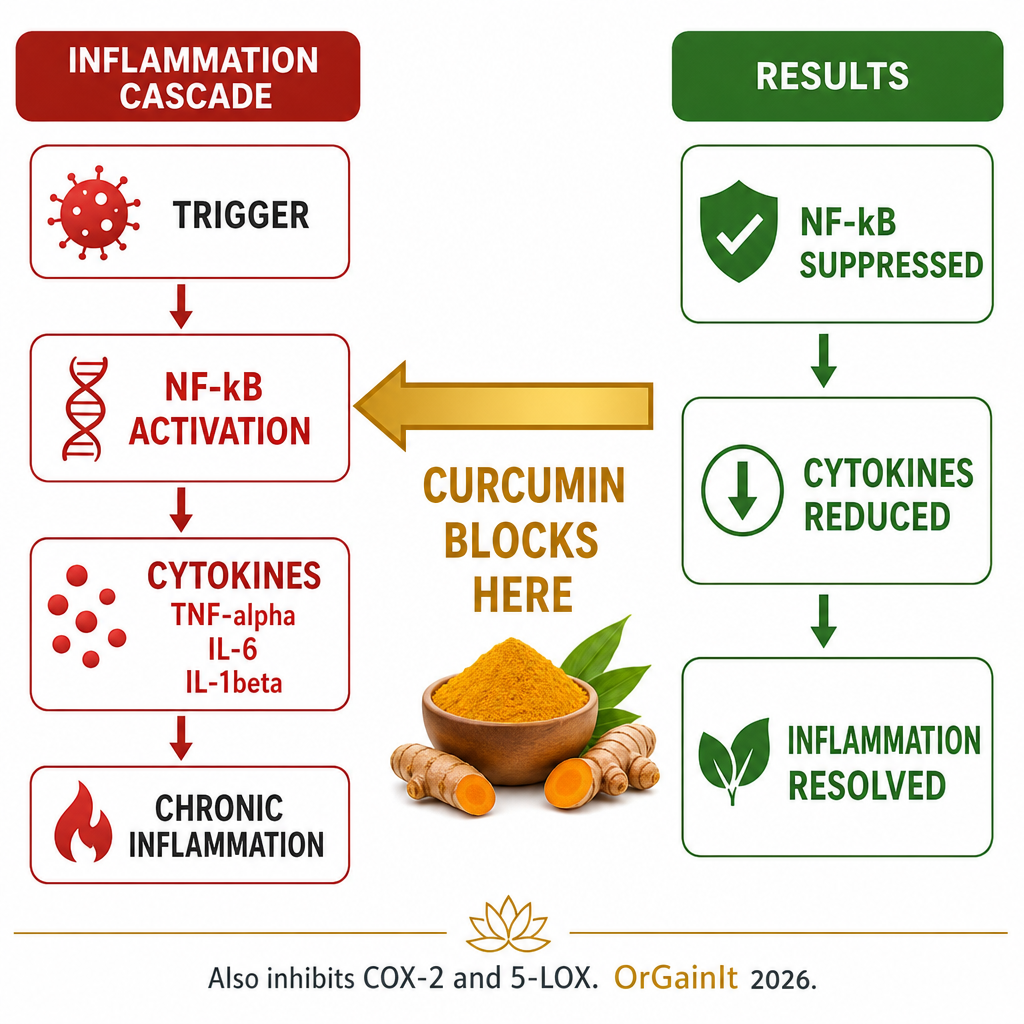
The NF-κB cascade — the inflammatory pathway curcumin suppresses at the source, reducing TNF-α, IL-6, IL-1β, and COX-2 simultaneously
Clinical Evidence: What the Trials Show
Joint Inflammation — Strongest Evidence
A 2016 systematic review and meta-analysis by Daily et al. in the Journal of Medicinal Food — 8 RCTs, 506 participants — found statistically significant improvements in both pain and function from curcumin/turmeric extracts versus placebo for arthritis. (PMID: 27533649)
Two head-to-head trials vs NSAIDs: Kuptniratsaikul et al. (2014) found 2g daily turmeric extract performed comparably to 800mg ibuprofen for knee osteoarthritis (PMID: 24672232). Shep et al. (2019) found curcumin 500mg three times daily performed comparably to diclofenac 50mg twice daily, with significantly fewer GI adverse events (PMID: 30712937). Full detail at: turmeric for arthritis.
Gut Inflammation
A placebo-controlled pilot study by Bundy et al. (2004) in Journal of Alternative and Complementary Medicine found standardised turmeric extract significantly reduced IBS symptom severity over 8 weeks. (PMID: 15070582) Curcumin’s anti-inflammatory and gut microbiome effects make it particularly relevant for post-40 digestive inflammation. Full guide: turmeric for digestion.
Cardiovascular Inflammation
A 2017 meta-analysis by Qin et al. in Nutrition Journal — 7 RCTs — found curcumin supplementation significantly reduced LDL cholesterol and triglycerides while improving endothelial function. (PMID: 28067838) Endothelial dysfunction is a primary driver of cardiovascular inflammation. Full guide: turmeric for heart health.
Brain Inflammation
The Small et al. (2018) UCLA 18-month RCT using Longvida® curcumin found not only cognitive improvements but measurable reductions in brain amyloid and tau — both markers of neuroinflammation. (PMID: 29246725) Full guide: turmeric for brain health.
Formulations: Why Delivery Determines Results
This is the section that separates people who get results from those who try turmeric and feel nothing. Standard curcumin powder from a budget supplement is rapidly metabolised and excreted — most of it never reaches the tissues where inflammation occurs. Advanced delivery systems change this fundamentally.
| Formulation | Bioavailability | Best For | More Info |
|---|---|---|---|
| Meriva® (phytosome) | 29x higher | Joint inflammation, OA | Meriva guide → |
| Longvida® (SLCP) | 95x higher | Brain + systemic inflammation | Longvida guide → |
| CurcuWin® (UltraSol) | 46x higher | Fast-acting inflammation, recovery | CurcuWin guide → |
| BCM-95® (biocurcumax) | 7x higher | General inflammation, no piperine | BCM-95 guide → |
| Liposomal | ~20x higher | Liquid delivery, gut inflammation | Liposomal guide → |
| Fermented turmeric | Enhanced | Gut tolerance, no piperine | Fermented guide → |
| Standard + piperine | ~20x higher | Budget-friendly baseline | Buying guide → |
For my continuously updated list of the formulas I currently recommend: best curcumin supplements for inflammation in 2026 on Benable.
12 Practical Turmeric Hacks for Inflammation
These are the things that actually make a difference in day-to-day use — from seven years of personal testing and reading the research:
 Fat first: Curcumin is fat-soluble — absorption increases significantly when taken with a meal containing fat. Mix into eggs, avocado toast, or a fatty coffee. Don’t take on an empty stomach.
- Morning consistency: Take it after breakfast daily. Consistency matters more than timing, but morning with food is the practical habit that sticks.
- Pair with movement: Even a 10-minute walk post-dose supports circulation and gets curcumin to inflamed tissue faster. My shoulder felt the difference quickly after adding this.
- Gut first: If digestive inflammation is your primary concern, look at turmeric for digestion — liposomal or fermented forms are gentler on sensitive guts.
- Dose right: 500–1,000mg curcumin of a bioavailable form daily is the evidence-supported starting point. More isn’t always better — before going higher, check side effects of turmeric.
- Fermented for gut tolerance: If piperine upsets your stomach or interacts with your medications, fermented turmeric delivers enhanced bioavailability without black pepper.
- Topical for local joint pain: Curcumin gels applied directly to painful joints have shown benefit in OA studies. Practical for knees, wrists, and elbows alongside oral supplementation.
- Pepper is non-negotiable for standard curcumin: If you’re using standard curcumin powder (not an advanced formulation), always combine with 5–20mg piperine (black pepper extract). Without it, most standard curcumin is wasted.
- Daily turmeric tea: A consistent low-dose habit — ¼ tsp turmeric, pinch of black pepper, hot water, honey. Not a therapeutic dose but meaningful daily support. Recipe: how to make turmeric tea.
- Cook with it: Add to curries, soups, rice, eggs. Turmeric with a fat source and black pepper in food — the way it’s been used safely for 4,000 years. See foods that use turmeric.
- Post-workout: Curcumin’s effect on exercise-induced muscle damage and soreness is supported by several studies. Take after training to reduce delayed onset muscle soreness.
- Combine with ginger: Ginger’s gingerols work through complementary anti-inflammatory pathways. The combination amplifies effect — see turmeric and ginger for the synergistic approach.
How Inflammation Affects Midlife — and Where Turmeric Helps
After 40, chronic low-grade inflammation becomes the common thread running through most of the things that start going wrong with the body. It’s not one disease — it’s the underlying mechanism. Here’s how it manifests and where curcumin has evidence:

- Joint pain and stiffness: The most well-evidenced application. Osteoarthritis is fundamentally an inflammatory condition. See turmeric for arthritis for the full RCT evidence.
- Gut inflammation: Bloating, IBS, and IBD-type flares are inflammatory. Curcumin’s direct anti-inflammatory effect on gut tissue, combined with prebiotic effects on the microbiome, makes it well-suited here.
- Heart disease risk: Vascular inflammation drives atherosclerosis. Curcumin’s endothelial and lipid effects directly address this. See turmeric for heart.
- Brain fog and cognitive decline: Neuroinflammation plays a central role in cognitive ageing. The Longvida® UCLA trial showed measurable improvement. See turmeric for brain health.
- Mood and depression: Depression has significant inflammatory components. Curcumin’s BDNF elevation and anti-inflammatory effects show promise for mild-to-moderate low mood. See turmeric for depression.
- Immune dysfunction: Both overactive immune response (autoimmune) and underactive immune function benefit from curcumin’s immunomodulatory properties. See turmeric for immunity.
- Skin inflammation: Psoriasis, eczema, and acne have inflammatory components. Curcumin’s topical and systemic effects both relevant. See turmeric for skin.
One more thing — and it matters: The quality of your turmeric supplement is not just a performance issue. Adulterated turmeric — containing lead chromate, synthetic dyes, or fillers — is documented in global supply chains. Knowing how to choose a safe, verified product is as important as knowing what dose to take. Full safety guide: side effects of turmeric including adulteration risks.
My Current Recommendation
? Where I’d Start for Inflammation in 2026
My current go-to recommendation for a well-rounded, daily anti-inflammatory supplement is Turmeric 3D by Organixx. USDA certified organic, fermented turmeric (no piperine, gentler on gut), KSM-66 ashwagandha for cortisol-driven inflammation, and 5,000 IU vitamin D3 — a smart midlife anti-inflammatory stack. Third-party tested, one-year money-back guarantee. Read my full Turmeric 3D review including 30-day personal testing notes. For joint-specific needs: see my Meriva curcumin guide. For brain-focused: Longvida guide.
Frequently Asked Questions
Does turmeric reduce inflammation?
Yes — multiple RCTs confirm curcumin (turmeric’s active compound) reduces inflammatory markers and clinical symptoms of inflammatory conditions, particularly joint inflammation. The mechanism involves NF-κB and COX-2 inhibition. Effective doses in trials range from 500–2,000mg curcuminoids daily of a bioavailable form.
How long does turmeric take to reduce inflammation?
Clinical trials showing significant results run 4–12 weeks. For joint pain, 4–8 weeks at therapeutic doses is the typical evidence window. Some people notice subjective improvements in 2–3 weeks. Consistency daily matters more than the size of any single dose.
What is the best turmeric supplement for inflammation?
Depends on the type of inflammation: Meriva® (phytosome) for joint-specific inflammation — it has the most OA-specific RCT data. Longvida® for brain/neuroinflammation. Fermented or liposomal for gut inflammation and sensitive digestion. All significantly outperform standard turmeric powder without an absorption enhancer. See my supplement selection guide.
Is turmeric anti-inflammatory or just marketing?
The anti-inflammatory mechanisms of curcumin are well-established biochemically — NF-κB, COX-2, LOX, iNOS inhibition are documented in peer-reviewed literature. Multiple human RCTs show clinical anti-inflammatory effects. The marketing hype problem is dosing and quality — standard turmeric powder at low doses does very little. The mechanism is real; the execution requires the right formulation.
Can I take turmeric with ibuprofen or naproxen?
Use caution. Curcumin has its own COX-2 inhibitory and mild antiplatelet effects. Combining with NSAIDs may increase bleeding risk or potentiate GI effects. If you’re taking NSAIDs regularly for inflammation, discuss curcumin supplementation with your doctor before starting. The goal should be complementary use under supervision, not replacing your prescribed treatment without advice.
Does cooking turmeric destroy curcumin?
Some curcumin degradation occurs at very high temperatures, but normal cooking temperatures preserve a useful amount. The more significant issue is absorption — dietary turmeric’s curcumin content (2–5%) and standard absorption are both low. Cooking with turmeric + black pepper + fat improves this substantially and is a meaningful daily habit, but not equivalent to a standardised supplement.
What other lifestyle factors help with chronic inflammation?
Curcumin works best as part of a broader anti-inflammatory approach: omega-3 fatty acids (fish oil or ground flaxseed), regular movement, sleep quality, Mediterranean dietary pattern, stress management (cortisol drives inflammation), maintaining healthy weight, and minimising processed foods and refined sugars. Curcumin addresses the biochemical pathways; lifestyle addresses the inputs.
Is turmeric safe for long-term daily use?
Clinical trials up to 18 months show no significant safety concerns at therapeutic doses. Traditional daily culinary use has a centuries-long safety record. Key qualifications: use a quality third-party tested product (avoid adulterated turmeric), be aware of medication interactions, and consult your doctor if you have gallbladder disease, kidney stone history, iron deficiency, or take blood thinners. Full safety detail: side effects of turmeric.
See also: Doctor’s Best C3 Complex Review (85/100 — Best Value Pick)
References
- Kunnumakkara AB, et al. “Curcumin, the golden nutraceutical: multitargeting for multiple chronic diseases.” Br J Pharmacol. 2017;174(11):1325–1348. PMC6093621
- Daily JW, et al. “Efficacy of Turmeric Extracts and Curcumin for Alleviating the Symptoms of Joint Arthritis.” J Med Food. 2016;19(8):717–729. PMID: 27533649
- Shep D, et al. “Safety and efficacy of curcumin versus diclofenac in knee osteoarthritis.” Trials. 2019;20(1):214. PMID: 30712937
- Kuptniratsaikul V, et al. “Efficacy and safety of Curcuma domestica extracts compared with ibuprofen.” Clin Interv Aging. 2014;9:451–458. PMID: 24672232
- Bundy R, et al. “Turmeric extract may improve irritable bowel syndrome symptomology in otherwise healthy adults.” J Altern Complement Med. 2004;10(6):1015–1018. PMID: 15070582
- Qin S, et al. “Efficacy and safety of turmeric and curcumin in lowering blood lipid levels.” Nutr J. 2017;16(1):68. PMID: 28067838
- Small GW, et al. “Memory and Brain Amyloid and Tau Effects of a Bioavailable Form of Curcumin.” Am J Geriatr Psychiatry. 2018;26(3):266–277. PMID: 29246725
This is great, I did not know so many things about turmeric but I knew it was good for weight loss ie provoking thermogenesis. This is truly a powerful spice we should take advantage of. My mother is having a problem with inflammation but she also doesn’t know about turmeric in this purpose. Thank you for sharing this great benefit of turmeric.
Hi Daniel. Great you have discovered yet another powerful benefit of the many this amazing spice can offer, I am 100% sure your mother will get great relief from using it correctly.
Thanks for stopping by.:)
I am from Thailand. When I was younger, I remembered my grandmother would put the turmeric powder all over my dog. I asked her why she did that, she said it was to get rid of ticks and fleas, can you believe that? It was effective but not so practical because our place turned orange. We also use a lot of turmeric for cooking as well, such as marinating the chicken for chicken satay.
I am glad that we all turn to incorporate the herbs rather than the modern medicines. They just have too many side effects.
I am currently taking turmeric and black pepper supplements everyday to control my ovarian cysts (another type of inflammation). Hopefully the size of my cysts will go down, I do see the improvement from month to month already. I no longer have unbearable cramps. I personally think that we all should take turmeric just to reduce the inflammation from our body.
Wow Nuttanee, thats turmeric flea and tick remedy is not one I have come across yet. So that is duly noted as I am discovering many wonderful products for animals in my research and will be doing a section on that category.
Thank you also for sharing your own experience for treating your cysts and the fact you are feeling better suggests that turmeric is doing its thing as an Anti-Proliferative phytochemical.
Excellent article. I have attempted to use turmeric for several different things but never found it to work the way I thought it should…or the way I heard others talk about it… I always used ground up turmeric and this is the first time that read anything about it being consumed with pepper so maybe that was my problem. Thank you for this article because I think I just learned something very important.
I also hope that your doctors are going to start recommending turmeric to their patients…even if big pharma doesn’t like it.
That’s a definite Dennis! So I am real glad at the least folks like you are discovering just that 1 value:) I didn’t receive any overwhelming response from the medical team around me but as the studies continue I am sure more and more doctors will do right their patients eventually.
Thanks for stopping by.