Turmeric for Gum Disease 2026: The Evidence Behind Curcumin’s Oral Health Benefits
Medical Disclaimer: The information on this site is not intended to be a substitute for professional medical advice, diagnosis, or treatment. Gum disease (gingivitis and periodontitis) is a medical condition. Please consult a licensed dentist or healthcare professional before using any supplement or home remedy as part of your oral care. This content is for informational purposes only.
⚡ Quick Answer: Does Turmeric Actually Help Gum Disease?
Yes — and there’s solid clinical evidence behind it. Curcumin, turmeric’s active compound, attacks gum disease through three routes: it kills periodontal pathogens (the bacteria driving the infection), suppresses the inflammatory response that destroys gum tissue, and promotes healing. A head-to-head clinical trial found turmeric mouthwash performed comparably to chlorhexidine — the gold-standard dentist antiseptic — for plaque and gingivitis control (PMC3633300).
- Best for: Gingivitis, early-stage periodontitis, reducing bleeding and inflammation, adjunct to professional dental treatment
- Forms that work: Turmeric toothpaste, mouthwash (DIY or liposomal liquid curcumin), topical gel, systemic curcumin supplement
- Not a replacement for: Professional dental cleaning, scaling, or prescribed treatment for advanced periodontitis
 I’ve spent over seven years researching and personally testing turmeric and curcumin formulations. Oral health hit close to home — I went through a rough patch with bleeding gums in my 40s before I sorted out my oral hygiene routine and found that adding turmeric mouthwash made a real difference to recovery speed. I’ve tested over 50 different anti-inflammatory formulas and I won’t recommend anything I haven’t personally evaluated. This guide draws on real peer-reviewed research — see my testing protocol and about page for credentials.
? In This Guide
- What Is Gum Disease and Why Midlife Makes It Worse
- The Science: How Curcumin Fights Gum Disease
- Turmeric vs Chlorhexidine: An Honest Comparison
- How to Use Turmeric for Gum Disease: Practical Methods
- The Products Rob Actually Uses
- Important Limitations: What Turmeric Won’t Do
- Supplement Recommendation
- Turmeric for Gum Disease — FAQ
What Is Gum Disease and Why Midlife Makes It Worse
Gum disease exists on a spectrum. Gingivitis is the early, reversible stage — bacteria in plaque trigger inflammation, causing red, swollen, bleeding gums. Left unchecked, it progresses to periodontitis — deeper infection that destroys the bone and connective tissue anchoring your teeth. At this stage it becomes irreversible without professional intervention.
Why does midlife matter? From the 40s onward, several factors compound gum disease risk: systemic inflammation increases with age, hormonal changes affect gum tissue in both men and women, medications become more common (many cause dry mouth, which accelerates bacterial growth), and the cumulative damage from years of inadequate flossing starts to show. Gum disease is also linked to cardiovascular risk, diabetes, and systemic inflammatory load — which is exactly where curcumin’s broader benefits become relevant.
The good news is that gingivitis is completely reversible with the right approach. And turmeric, used correctly alongside proper brushing and flossing, has genuine clinical backing.
The Science: How Curcumin Fights Gum Disease
1. Antibacterial Action Against Periodontal Pathogens
Gum disease is driven by a specific community of bacteria — notably Porphyromonas gingivalis, Fusobacterium nucleatum, and Treponema denticola. Curcumin has demonstrated direct antibacterial activity against these pathogens in laboratory studies, disrupting their cell membranes and inhibiting biofilm formation. This is why turmeric mouthwash reduces plaque — it’s attacking the bacteria that build it.
The landmark clinical trial here is Waghmare et al. (2011), which ran a randomised controlled comparison of turmeric mouthwash versus chlorhexidine gluconate (the dentist-prescribed antiseptic rinse) over 21 days. Both groups showed significant reductions in plaque index, modified gingival index, and microbial counts. Turmeric performed comparably to chlorhexidine — without chlorhexidine’s side effects of taste disruption and tooth staining (PMC3633300).
🔍 What the Waghmare trial actually showed: Both 0.1% turmeric mouthwash and 0.2% chlorhexidine mouthwash significantly reduced plaque and gingivitis scores over 21 days. The turmeric group showed comparable microbial reduction with better tolerance. This is a properly conducted RCT — not a case study or anecdote.
2. NF-κB Suppression — Calming the Inflammatory Destruction
In periodontitis, it’s not just the bacteria causing damage — it’s your own immune response. The inflammatory cascade triggered by bacterial presence releases enzymes (matrix metalloproteinases) that degrade the collagen fibres and bone supporting your teeth. Curcumin is a potent NF-κB inhibitor — the same master inflammatory switch it targets for joint conditions like arthritis. By suppressing IL-1β, TNF-α, and COX-2 expression in periodontal tissue, curcumin may slow the tissue destruction associated with untreated periodontitis.
A comprehensive review by Kunnumakkara et al. (2017, PMC6093621) documents curcumin’s pleiotropic anti-inflammatory effects across multiple tissue types, with periodontal tissue behaving similarly to other connective tissue sites where curcumin has demonstrated benefit.
3. Tissue Repair and Antioxidant Protection
Curcumin doesn’t just suppress inflammation — it actively promotes tissue healing through upregulation of growth factors involved in collagen synthesis. In the context of gum disease, this means faster resolution of inflamed tissue and potentially better outcomes after professional dental procedures. Curcumin also scavenges the reactive oxygen species (free radicals) generated during periodontal inflammation, reducing oxidative damage to gum and bone tissue between flares.
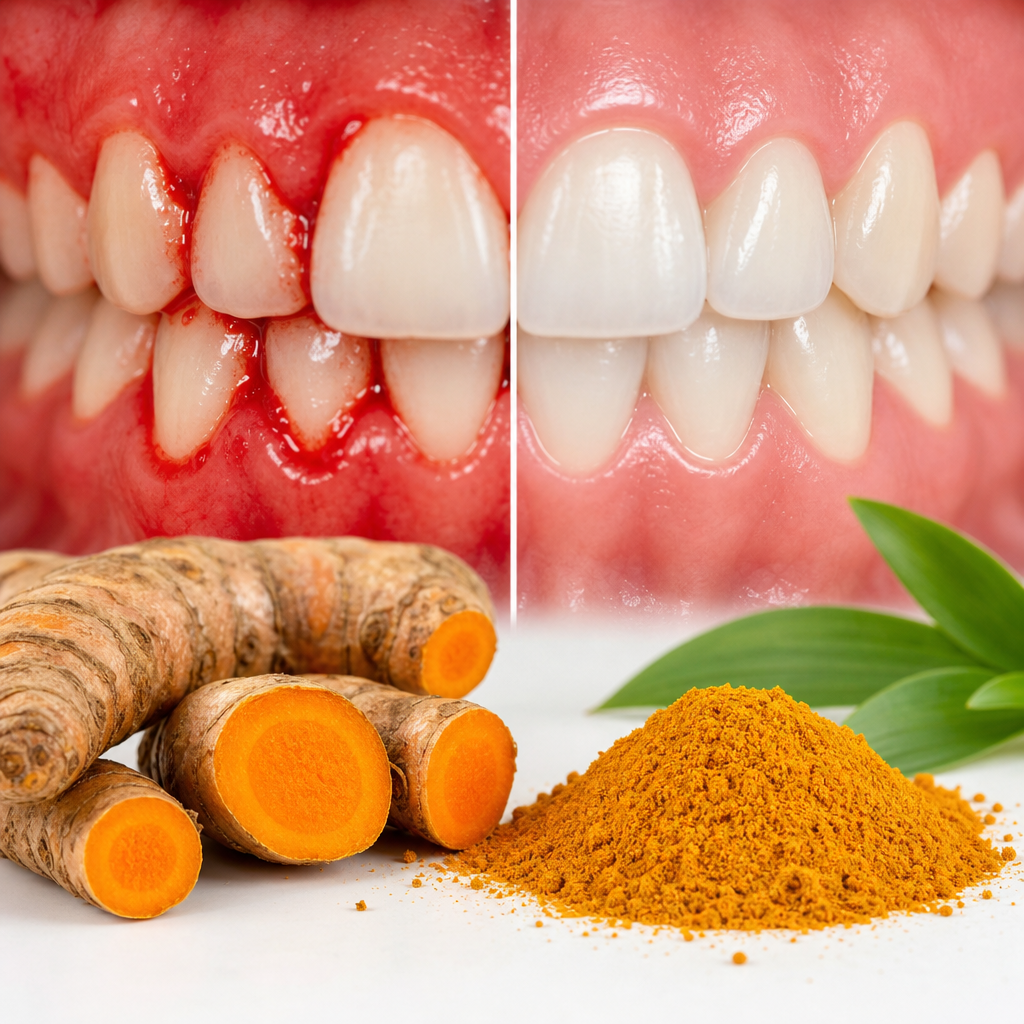
Turmeric vs Chlorhexidine: An Honest Comparison
| Factor | Chlorhexidine (Standard Dentist Rinse) | Turmeric Mouthwash / Gel |
|---|---|---|
| Clinical evidence | ✅ Extensive | 🔶 Growing — RCT evidence exists (PMC3633300) |
| Plaque reduction | ✅ Strong | ✅ Comparable in direct trial |
| Taste / tolerance | ❌ Often unpleasant, disrupts taste long-term | ✅ Better tolerated, earthy taste |
| Tooth staining | ❌ Common with prolonged use | 🔶 Can yellow temporarily — rinse well |
| Systemic benefits | ❌ None | ✅ Anti-inflammatory, cardiovascular support |
| Cost | 🔶 Moderate | ✅ Low (DIY) or moderate (supplement) |
| Long-term daily use | ❌ Not recommended (disrupts oral microbiome) | ✅ Safe for ongoing use |
The key takeaway: chlorhexidine is a heavy hitter for short-term acute treatment (it’s what dentists prescribe post-procedure). Turmeric is the better option for ongoing, daily oral health maintenance — safer for long-term use, without the microbiome disruption concerns.
How to Use Turmeric for Gum Disease: Practical Methods
Method 1: Turmeric Mouthwash (Most Evidence-Backed)
This is the method used in the Waghmare RCT. It’s simple and the clinical support is the most direct:
- Dissolve ¼ tsp turmeric powder in 1 cup warm water
- Swish for 60 seconds, making sure the rinse reaches all gum surfaces
- Spit — do not swallow
- Rinse mouth with plain water after to limit staining
- Use daily after brushing, morning or evening
Enhanced version: Add a pinch of fine salt (antibacterial) and a drop of peppermint essential oil (freshness + additional antimicrobial effect).
Method 2: Turmeric Gel (Best for Targeted Relief)
For localised inflammation or specific sore spots, a topical gel gets higher concentration curcumin directly to the tissue:
- 1 tsp turmeric powder
- 2 tsp melted coconut oil
- Optional: 3 drops peppermint essential oil, ¼ tsp baking soda
Mix to a smooth paste. Apply to gums with a clean finger, massage gently for 1–2 minutes. Leave for 5–15 minutes, then rinse thoroughly. Use once or twice daily. The coconut oil provides a fat base that improves curcumin contact time with tissue and adds its own antibacterial (lauric acid) properties.
Method 3: Systemic Curcumin Supplement (Long-Term Support)
Topical methods address local bacterial load and inflammation. A systemic curcumin supplement addresses the broader inflammatory environment — useful for people with periodontitis, where systemic inflammation plays a role, or anyone managing chronic inflammatory conditions alongside their oral health.
For systemic use, bioavailability matters — standard turmeric powder absorbs poorly. Look for enhanced formulations. For a clear breakdown of what the different formulations actually do, see our turmeric vs curcumin guide.
📍 My Curated Supplement Picks: I maintain an updated list of the best curcumin supplements at Benable — Best Curcumin Supplements for Inflammation in 2026. Includes formulations relevant for systemic gum disease support alongside oral care.
The Products Rob Actually Uses: His Current Oral Health Stack
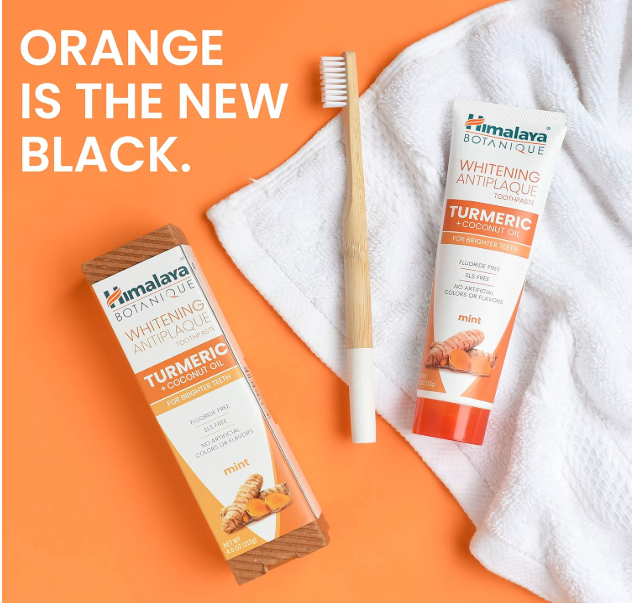
After years of testing DIY methods, I want to share two specific products that have earned a permanent place in my daily oral care routine. These aren’t sponsored picks — they’re what I personally use, and one of them has produced what I can only describe as a genuine turning point in my gum health.
Affiliate disclosure: The links below are Amazon affiliate links. I earn a small commission at no extra cost to you — and I only link to products I actually use.
Important Limitations: What Turmeric Won’t Do
⚠ Be honest with yourself here: If you have established periodontitis — deep pockets, bone loss, loose teeth — turmeric mouthwash will not reverse that. You need professional scaling, root planing, and possibly surgical intervention. Use turmeric as an adjunct to professional care, not a substitute for it. If your gums bleed every time you brush, that’s a signal to see a dentist — not to experiment with home remedies alone for six months.
Supplement Recommendation: What to Take Systemically
If you want to add a systemic curcumin supplement to support your oral health alongside topical use, formulation choice matters — and for gum disease specifically, the science points to one clear winner.
Notice the pattern in what’s working topically: the reason liposomal and liquid curcumin formats penetrate gum tissue more effectively than a powder suspension is phospholipid delivery — the fat-soluble encapsulation that allows curcumin to cross cell membranes rather than just wash over their surface. Meriva® curcumin phytosome works on the same principle systemically. It’s bound to phosphatidylcholine, which dramatically improves absorption in the gut and uptake into connective tissue — the tissue type that matters most in gum disease. It’s not a coincidence that Meriva has more peer-reviewed tissue-inflammation RCTs than any other patented curcumin formulation. This is the systemic pick that actually matches the mechanism.
🌟 Recommended for Gum Disease: Nootropics Depot Meriva® Curcumin Phytosome
Phosphatidylcholine-bound curcumin — the same delivery principle as the liposomal rinse, in capsule form. Meriva has the deepest clinical evidence base for tissue and connective tissue inflammation of any patented curcumin formulation. Nootropics Depot’s version uses pharmaceutical-grade Meriva®, third-party tested, transparent labelling. It’s my personal go-to for systemic curcumin — and for a condition rooted in tissue inflammation, it’s the most clinically honest recommendation I can make.
Turmeric for Gum Disease — FAQ
Is turmeric mouthwash as effective as chlorhexidine?
For ongoing daily use, yes — and with fewer side effects. The Waghmare et al. (2011) RCT (PMC3633300) showed comparable plaque and gingivitis reduction between turmeric and chlorhexidine mouthwash over 21 days. Chlorhexidine is stronger for acute or post-procedure use, but causes tooth staining and microbiome disruption with long-term daily use. Turmeric is a better option for everyday maintenance.
How long does turmeric take to help gum disease?
Most clinical trials show measurable improvement in plaque index and gingival bleeding scores within 2–4 weeks of consistent daily use. Gingivitis (early-stage gum disease) can improve significantly in this timeframe. Periodontitis takes longer and requires professional treatment alongside any home remedy approach.
Can I use turmeric gel on my gums every day?
Yes — daily use is generally safe and is consistent with how the clinical protocols were run. The main side effect is temporary yellowing of gums and teeth from the curcumin pigment. Rinse thoroughly with plain water after use and this resolves quickly. If you notice increased sensitivity or irritation, reduce frequency.
Will turmeric stain my teeth permanently?
No. The yellow staining from turmeric use is superficial and temporary — it rinses away. It’s not comparable to the extrinsic staining caused by long-term coffee or tea use. Rinsing your mouth with plain water immediately after using turmeric mouthwash or gel significantly reduces any colouration.
Can I use turmeric alongside my prescribed dental treatment?
Generally yes — turmeric is safe alongside most dental treatments and antibiotics commonly prescribed for gum disease. However, if you’re on blood thinners, high-dose systemic curcumin supplements (not the mouthwash) warrant a conversation with your prescriber, as curcumin has mild antiplatelet properties. The topical mouthwash and gel applications absorb minimally systemically and are unlikely to interact.
Does swallowing turmeric help gum disease from the inside?
Systemic curcumin supplementation can reduce whole-body inflammatory load, which may benefit periodontal health indirectly — the same inflammation driving joint disease contributes to periodontitis severity. For direct antibacterial and anti-inflammatory effects in the mouth, topical application (mouthwash or gel) is more targeted and efficient than relying on systemic absorption alone.
What’s the best turmeric supplement for gum disease?
For systemic anti-inflammatory support, a bioavailability-enhanced formulation matters. Fermented turmeric (like Turmeric 3D), phosphatidylcholine-bound (Meriva®), or BCM-95® formulations all outperform standard turmeric powder. For topical use (mouthwash/gel), plain organic turmeric powder is perfectly effective — you don’t need an expensive supplement for that application.
Can children or teenagers use turmeric for gum disease?
The clinical evidence base is primarily in adults. For children and teenagers, consult a dentist before using any topical treatment for gum concerns. Good brushing technique and professional cleaning remain the primary interventions for younger patients.
Is turmeric good for receding gums?
Turmeric can help reduce the inflammation that drives gum recession, but it cannot regenerate gum tissue that has already receded — that requires surgical intervention in severe cases. If you’re seeing noticeable recession, see a periodontist. Curcumin’s anti-inflammatory and tissue-healing properties may help slow progression when used consistently alongside proper oral hygiene.
I have made a turmeric paste with turmeric and black pepper I rub it on my gums and teeth everyday I was told by dentist I was going to lose my teeth was going to cost me a fortune so I went online and found this recipe I leave it on for about 1/2 hour and it sinks in to the gums I will try your recipe can you use normal honey cause I have some of that at home
Hi Sharon.
It is so great you are giving it a go. I bet you are getting great relief from applying turmeric to your affected areas?
And yes SURE you can use normal honey, however if possible I would recommend a RAW type.
My teeth and gums are doing well and on the mend. I would love to hear any and all of your results too:)
Many Regards Rob
I know that turmeric powder contains antiseptic and anti-inflammatory properties. When utilized as a toothpaste, turmeric can help create an environment where bacteria die. It’s very effective. Now, my advice for anybody reading this is to mix turmeric with water to create a paste, and then brush with it two times a day. It’s an awesome way to keeping gum disease under control.
Hi Ann.
Thanks for that simple add:) for sure something as simple as just that recipe will help with positive results.