Turmeric for Acne 2026: Antibacterial, Anti-Inflammatory and the Science Behind Clear Skin
Medical Disclaimer: The information on this site is not intended to be a substitute for professional medical advice, diagnosis, or treatment. Skin conditions like acne require professional diagnosis. Please consult a licensed dermatologist before changing any treatment plan or adding supplements. This content is for informational purposes only.
⚡ Quick Answer: Does Turmeric Work for Acne?
Yes — through antibacterial, anti-inflammatory, and sebum-regulating mechanisms. Acne is driven by Cutibacterium acnes bacteria, excess sebum, inflammation, and follicular hyperkeratinisation. Curcumin has demonstrated antibacterial activity against C. acnes in laboratory studies, suppresses the NF-κB inflammatory cascade driving acne lesions, and modulates PPAR-γ receptors involved in sebum regulation. Topical application directly to lesions and oral supplementation for systemic support both have roles.
- Best for: Inflammatory acne (red, painful lesions), post-acne hyperpigmentation, adult/hormonal acne in midlife
- Both routes work: Topical masks/pastes for direct action; oral supplement for systemic anti-inflammatory
- Staining note: Turmeric temporarily stains skin — patch test before use on face (see also: turmeric side effects & safety)
 Seven years testing turmeric formulations, including extensive evaluation of their skin health applications. I look at the evidence first, the marketing claims second. See my testing protocol and about page.
Why Adult Acne Hits Different in Midlife
Acne is commonly dismissed as a teenage problem — but adult-onset and midlife acne is increasingly prevalent, particularly in women during perimenopause and menopause. The drivers are distinct from teen acne: hormonal fluctuations (declining oestrogen, relative androgen dominance) increase sebum production; chronic stress elevates cortisol which stimulates sebaceous glands; slower cell turnover means clogged pores take longer to clear; and years of cumulative sun damage and environmental exposure weaken the skin’s barrier function.
For men, declining testosterone combined with stress-driven cortisol spikes creates a similar sebum-overproduction picture. Turmeric’s systemic benefits include gut microbiome support — and gut dysbiosis — increasingly common in midlife — also contributes to systemic inflammation that manifests in skin. This is why purely topical treatments often underperform for midlife acne: the internal inflammatory load needs addressing too.
How Curcumin Targets Acne: Four Mechanisms
1. Antibacterial Against Cutibacterium acnes
Cutibacterium acnes (formerly Propionibacterium acnes) is the primary bacterial driver of inflammatory acne. Laboratory studies have demonstrated curcumin’s direct antibacterial activity against this organism, disrupting its cell membrane integrity and inhibiting biofilm formation. This is the mechanism behind turmeric’s long traditional use as a topical skin treatment in Ayurvedic practice.
2. NF-κB Suppression — Calming the Inflammatory Lesion
The redness, swelling, and pain of inflammatory acne lesions are driven by NF-κB activation producing IL-1β, IL-8, and TNF-α in response to bacterial colonisation. Curcumin’s NF-κB inhibition — the cornerstone of its anti-inflammatory action across all tissue types — directly suppresses this inflammatory cascade in sebaceous follicles, reducing lesion size and severity.
3. Sebum Regulation via PPAR-γ
Curcumin activates PPAR-γ (peroxisome proliferator-activated receptor gamma), a nuclear receptor that helps regulate sebocyte (oil gland cell) differentiation and sebum production. This makes it relevant not just for inflammatory lesions but for the underlying overproduction of sebum that feeds acne in the first place — particularly relevant for hormonal adult acne.
4. Post-Acne Hyperpigmentation
Curcumin inhibits melanin synthesis by suppressing tyrosinase activity — the enzyme responsible for melanin production. This makes it potentially useful for fading the post-inflammatory hyperpigmentation (dark spots) that often persist long after acne lesions have cleared. This is one of the most valued traditional uses of turmeric in South Asian skincare.
How to Use Turmeric for Acne
Topical: Turmeric Face Mask
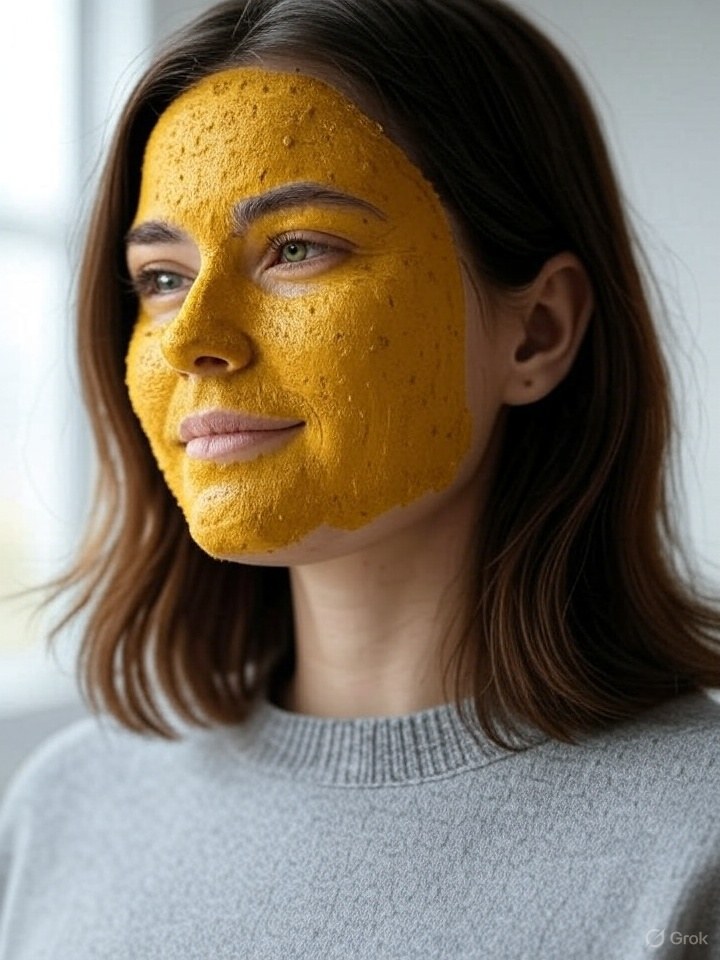
The topical route provides direct antibacterial and anti-inflammatory action at the lesion site:
- Basic mask: 1 tsp turmeric powder + 2 tsp raw honey (antibacterial) + 1 tsp plain yoghurt (lactic acid exfoliant). Mix to a paste, apply to affected areas, leave 10–15 minutes, rinse with warm water.
- For oily/sebum-prone skin: Substitute coconut oil for honey, add a drop of tea tree oil.
- For hyperpigmentation: Add ½ tsp vitamin C powder (ascorbic acid) to boost the depigmenting effect.
- Patch test first: Apply to the inside of your wrist for 24 hours before applying to face — particularly important for people with reactive or sensitive skin.
- Staining: Turmeric will temporarily stain skin yellow — this fades within hours. It will permanently stain towels and fabric.
Oral Supplement: Systemic Anti-Inflammatory
For people with persistent inflammatory acne driven by systemic factors (stress, hormonal, gut dysbiosis), oral curcumin addresses the internal inflammatory load that topical treatments can’t reach. A bioavailability-enhanced formulation (fermented, Meriva®, or BCM-95®) at 500–1000mg/day provides meaningful systemic anti-inflammatory support. See our formulations guide for a full comparison.
🔗 Meriva® phytosome: Best Meriva® supplements (2026) | What is Meriva®? | 7 proven benefits
? My Top-Rated Curcumin Picks: Benable — Best Curcumin Supplements for Inflammation in 2026.
Recommended Supplement
Turmeric 3D by Organixx — USDA organic, fermented (enhanced bioavailability), piperine-free (important if on skin medications), with KSM-66 and Vitamin D3.
Turmeric for Acne — FAQ
Does turmeric help hormonal acne?
Yes — particularly through the PPAR-γ sebum regulation pathway and systemic NF-κB suppression. Hormonal acne driven by androgen dominance or cortisol-induced sebum overproduction responds well to the combined approach of oral curcumin (systemic anti-inflammatory) and topical application (direct antibacterial + anti-inflammatory at lesion sites).
How long does turmeric take to work for acne?
Topical application can reduce redness and swelling in active lesions within hours. For systemic oral supplementation effects on acne frequency and sebum regulation, consistent daily use for 4–8 weeks is needed before meaningful assessment.
Will a turmeric mask stain my face permanently?
No. The yellow staining from turmeric masks is superficial and temporary — typically fading within a few hours. Rinsing with a gentle cleanser immediately after application minimises it. It will permanently stain fabric, so use old towels. People with very fair skin or using turmeric on sensitive/compromised skin may notice slightly longer staining.
Can I use turmeric with benzoyl peroxide or retinoids?
Space them out — don’t apply simultaneously. Benzoyl peroxide and retinoids already sensitise skin; adding turmeric at the same time can cause irritation. Apply turmeric mask on alternate days from active acne treatments, or use it in the morning while retinoids/BP are evening-only. Start slowly and monitor your skin’s response.
Is turmeric good for acne scars?
Yes, particularly for post-inflammatory hyperpigmentation (PIH) — the dark spots left after inflammatory lesions heal. Curcumin’s tyrosinase inhibition helps fade this hyperpigmentation over time. For actual textural scarring (indented scars), curcumin doesn’t have direct scar-remodelling evidence — that typically requires professional treatment (microneedling, laser).
What is the best way to use turmeric for acne in combination with other natural remedies?
Effective combinations: turmeric + honey (antibacterial synergy), turmeric + niacinamide (sebum regulation + anti-inflammatory), turmeric + vitamin C (hyperpigmentation clearance + antioxidant). Avoid combining with strong exfoliating acids (AHAs, BHAs) in the same application — the increased skin permeability can cause irritation.
Can men use turmeric for acne?
Absolutely. Male adult acne is often driven by stress-cortisol sebum overproduction, shaving irritation, and gut dysbiosis. The antibacterial and anti-inflammatory mechanisms are equally relevant regardless of sex. The staining concern is the same for everyone — rinse well.
Is oral turmeric better than topical for acne?
They work differently and ideally complement each other. Topical is more direct and faster for individual lesions. Oral supplementation addresses the systemic inflammatory and hormonal load that drives recurrent acne. For mild-to-moderate acne, topical alone may be sufficient. For persistent, recurring inflammatory acne, the combination approach is more comprehensive.
? Skin Health Cluster — Related Reading
Turmeric’s skin benefits extend beyond acne. These pages cover the broader evidence base:
- Turmeric for Skin Benefits — Complete guide covering wound healing, hyperpigmentation, eczema, and barrier repair
- Turmeric for Psoriasis — Clinical evidence for autoimmune skin disease and plaque reduction (Antiga 2015 trial)
- Turmeric for Inflammation — The NF-κB mechanism that drives skin results
- Turmeric Side Effects & Safety — What to know before starting supplementation
- Turmeric for Depression & Stress — Cortisol and stress are major acne drivers; addressing them systemically helps
- What Is Turmeric Good For? — Full hub covering all health applications
- Turmeric vs Curcumin — Why the formulation you choose determines results