Turmeric for Heart Health: What the 2026 Research Really Shows

Independent supplement researcher · 7+ years studying turmeric & curcumin
I started researching turmeric after an ankle injury led me down the rabbit hole of natural anti-inflammatories. But it was watching mates in my 40s and 50s face cardiac scares that made heart health personal. This page reflects what I’ve learned after seven years of reading clinical trials, studying formulation science, and testing what actually works.
Why Heart Health Needs to Be Your Priority (Especially After 40)
Heart disease remains the leading cause of death in New Zealand, Australia, and across the Western world. And here’s the uncomfortable truth: it rarely announces itself. By the time symptoms appear, the damage inside your arteries has usually been building for years — driven by chronic inflammation, oxidative stress, and gradually stiffening blood vessels.
If you’re in the 40–65 bracket, you’re in the window where lifestyle choices have their greatest compounding impact. The inflammation you address now — or don’t — determines what your arteries look like in a decade.
That’s where turmeric comes in. Not as a miracle cure. Not as a replacement for medication. But as one of the most thoroughly researched natural compounds for cardiovascular support — with a 2024–2025 evidence base that’s stronger than ever.
Let me walk you through exactly how it works, what the new research shows, where the real risks lie, and — critically — which formulation actually gets curcumin into your bloodstream (because that part matters enormously for heart health).
How Curcumin Protects Your Heart: The 4 Evidence-Based Pathways
Curcumin doesn’t work through a single mechanism. That’s actually what makes it so interesting for cardiovascular research — it targets multiple pathways simultaneously. Here’s what the clinical literature confirms.
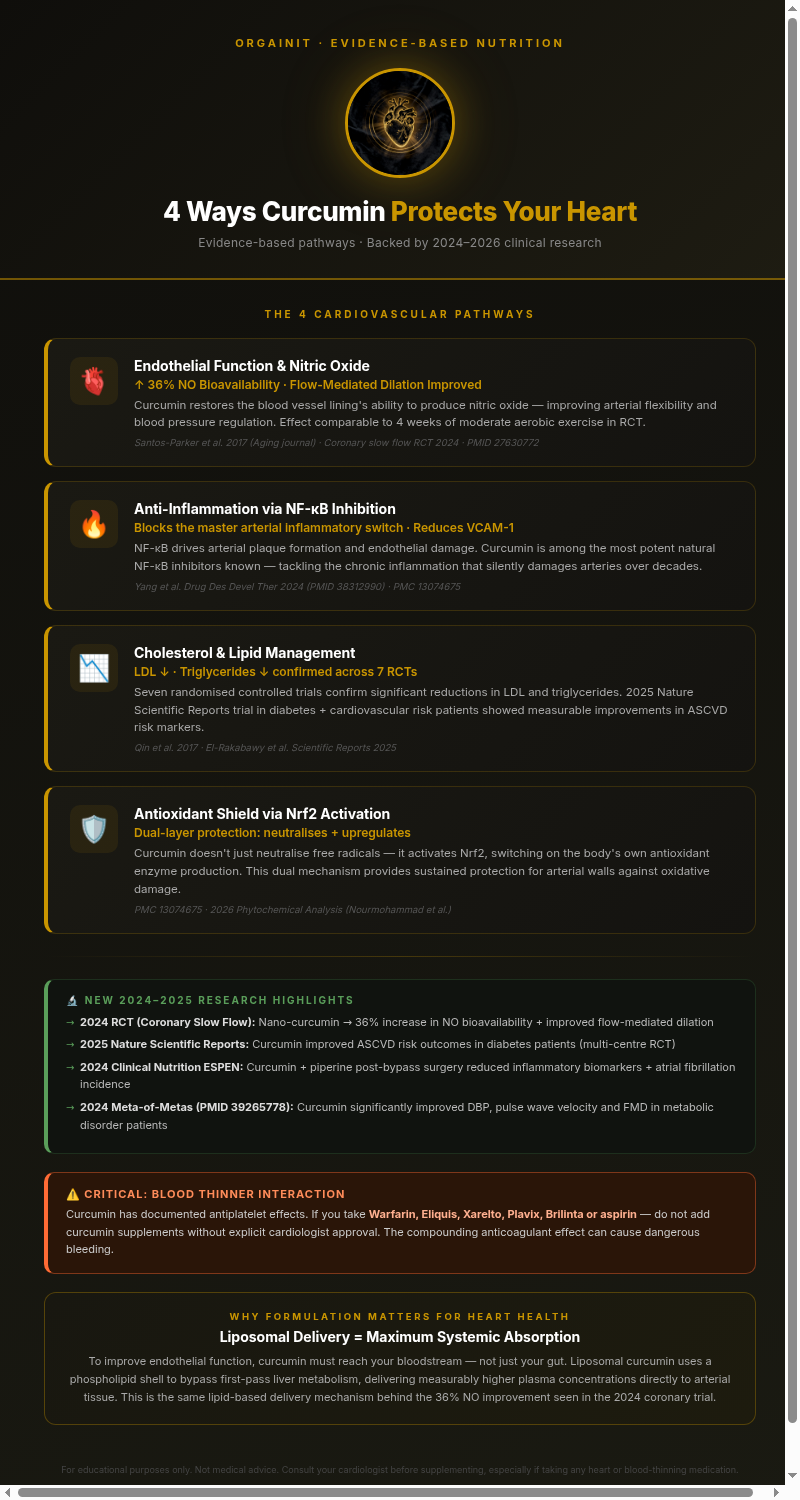
? Pathway 1: Endothelial Function & Nitric Oxide Production
The endothelium is the single-cell-thick lining of your blood vessels. When it’s healthy, it produces nitric oxide (NO) — a molecule that keeps your arteries flexible, regulates blood pressure, and prevents the kind of sticky, inflamed vessel wall that allows plaque to form.
Endothelial dysfunction — the gradual loss of this NO-producing ability — is now considered one of the earliest detectable markers of cardiovascular disease, predating visible plaque by years.
This is where curcumin’s most compelling cardiovascular research lies:
- Santos-Parker et al. (2017, Aging journal): 12 weeks of curcumin supplementation improved conduit artery endothelial function by 1.3% brachial flow-mediated dilation (FMD) in healthy middle-aged and older adults — an improvement comparable to four weeks of moderate aerobic exercise.
- PMID 27630772: Double-blind, placebo-controlled trial — “a novel form of curcumin” produced a dose-mediated improvement in endothelial function measured by FMD, with the higher dose (200mg) achieving a clinically meaningful 3.0% increase (p=0.032).
- 2024 RCT (Coronary Slow Flow Phenomenon): Nano-curcumin supplementation produced a 36% increase in NO bioavailability and significantly improved flow-mediated dilation — providing one of the most specific and measurable cardiovascular outcomes in the curcumin literature to date.
The key insight from all three: curcumin must reach systemic circulation to work on endothelial tissue. This is not a gut-level effect — it requires the compound to actually get into the bloodstream. Which brings us back to formulation (more on that below).
See also: What is liposomal turmeric and why does delivery matter?
? Pathway 2: Anti-Inflammation via NF-κB Inhibition
Nuclear factor kappa-B (NF-κB) is sometimes called the “master switch” of inflammation. When chronically activated — by a poor diet, stress, visceral fat, or smoking — it drives the expression of pro-inflammatory cytokines that directly damage arterial walls and accelerate plaque formation.
Curcumin is one of the most well-characterised natural inhibitors of NF-κB signalling. By downregulating this pathway, it reduces the production of IL-6, TNF-α, VCAM-1, and other molecular players in atherosclerosis.
Yang et al. (2024, Drug Design, Development and Therapy, PMID 38312990) reviewed the full mechanistic picture: curcumin inhibits foam cell formation, protects endothelial cells, reduces vascular smooth muscle cell proliferation, and suppresses plaque-rupture mechanisms — essentially targeting atherosclerosis at every key stage.
The 2026 comprehensive review (Nourmohammad et al., Phytochemical Analysis) corroborates this across multiple cardiovascular disease subtypes, from coronary artery disease to diabetic cardiomyopathy.
Related: How turmeric fights inflammation — the full science
? Pathway 3: Cholesterol & Lipid Management
High LDL cholesterol and elevated triglycerides are among the most well-established cardiovascular risk factors. Multiple randomised controlled trials have examined curcumin’s effect on the lipid panel — and the results are consistently positive.
Qin et al. (2017) meta-analysed data from seven RCTs and found significant reductions in both LDL cholesterol and triglycerides with curcumin supplementation. These aren’t marginal effects — they’re clinically meaningful reductions in the same markers your GP is monitoring.
More recently, El-Rakabawy et al. (Nature Scientific Reports, 2025) conducted a multi-centre RCT on patients with type 2 diabetes and atherosclerotic cardiovascular risk — one of the highest-risk populations for cardiac events. Curcumin supplementation improved ASCVD clinical outcome markers, building a direct bridge between curcumin’s lipid effects and real-world cardiovascular risk reduction.
The diabetes-heart connection is significant: diabetes dramatically amplifies cardiovascular risk through the same oxidative stress and endothelial dysfunction pathways that curcumin targets. See our deep-dive: Turmeric for diabetes — how it addresses the metabolic-cardiovascular link.
?️ Pathway 4: Antioxidant Protection via Nrf2 Activation
Oxidative stress — an imbalance between free radical production and the body’s ability to neutralise them — is a core driver of arterial damage. LDL cholesterol only becomes dangerous when it’s oxidised; oxidised LDL triggers the entire inflammatory cascade that leads to plaque.
Curcumin addresses oxidative stress through a two-layer mechanism that makes it particularly powerful:
- Direct neutralisation: Curcumin’s polyphenol structure allows it to directly scavenge reactive oxygen species (ROS).
- Nrf2 activation: Curcumin activates the Nrf2 transcription factor, which switches on the body’s own antioxidant enzyme production — including superoxide dismutase and glutathione. This creates a self-sustaining protective effect that lasts beyond the supplement’s presence in the bloodstream.
This dual mechanism means curcumin doesn’t just mop up existing free radicals — it recalibrates your body’s antioxidant capacity at the genetic level. For arterial wall protection, this is a meaningful distinction.
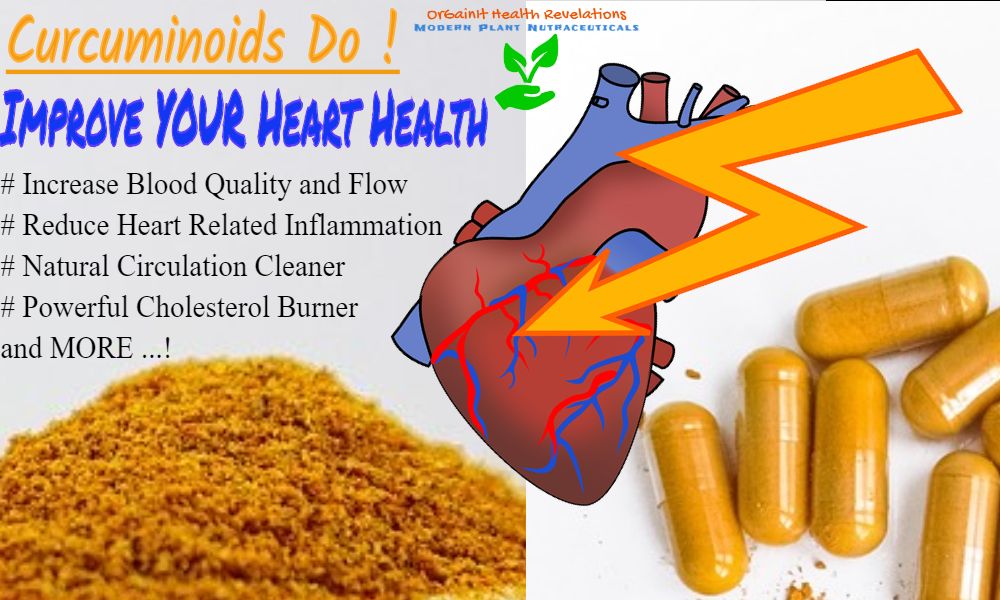
? What the 2024–2025 Research Adds (New Findings)
The last two years have produced some of the strongest human-trial data yet for curcumin and cardiovascular health. Here’s what’s new:
1. Coronary Slow Flow Phenomenon RCT (2024)
This trial focused on a specific cardiovascular condition — coronary slow flow (CSF), where blood moves abnormally slowly through the coronary arteries despite no visible obstruction. It’s associated with endothelial dysfunction and oxidative stress.
Nano-curcumin supplementation produced a 36% increase in nitric oxide bioavailability and significantly improved flow-mediated dilation. This is notable for two reasons: (1) it’s a measurable, objective cardiovascular endpoint, not a surrogate marker, and (2) it directly validates the mechanism — curcumin → increased NO → improved arterial function.
2. Nature Scientific Reports (2025) — Diabetes + ASCVD
El-Rakabawy et al. conducted a multi-centre RCT in patients with both type 2 diabetes and atherosclerotic cardiovascular disease risk — the hardest-to-treat, highest-risk population. Curcumin supplementation improved clinical outcome markers across multiple ASCVD risk factors, providing direct evidence for curcumin’s utility as an adjunctive therapy in this high-risk group.
3. Post-Bypass Surgery Trial (Clinical Nutrition ESPEN, 2024)
Tehrani et al. evaluated curcumin + piperine co-supplementation in patients recovering from coronary artery bypass graft (CABG) surgery — about as high-stakes a cardiac context as you can get. Results showed significant reductions in inflammatory biomarkers and, crucially, a reduction in post-operative atrial fibrillation incidence. This is a genuinely exciting finding for anyone with a history of arrhythmia.
4. Meta-of-Metas on Endothelial Function (PMID 39265778, 2024)
This umbrella meta-analysis pooled results from multiple prior meta-analyses of RCTs and confirmed that curcumin supplementation significantly improved diastolic blood pressure (DBP), pulse wave velocity (PWV — a measure of arterial stiffness), VCAM-1 (a marker of vascular inflammation), and FMD in patients with metabolic disorders. The convergence of multiple meta-analyses on the same findings substantially strengthens confidence in these effects.
⚠️ The Most Important Section: Curcumin and Heart Medications
Pull up a chair. If you’re on any medication for your heart — especially blood thinners — this section is non-negotiable reading.

Curcumin has a well-documented antiplatelet effect — it reduces the clotting ability of your blood. In a healthy person with no medications, this is actually one of its cardiovascular benefits. But if you’re already on pharmaceutical anticoagulants or antiplatelets, combining them with therapeutic doses of curcumin can compound the effect and dramatically increase your bleeding risk.
The medications to be extremely cautious with:
- Anticoagulants: Warfarin (Coumadin), Apixaban (Eliquis), Rivaroxaban (Xarelto), Dabigatran (Pradaxa)
- Antiplatelets: Clopidogrel (Plavix), Ticagrelor (Brilinta), Aspirin (heart-protective dose)
- Statins: Some evidence of curcumin-statin interaction via CYP3A4 pathway — always disclose to your prescribing doctor
This is not a “maybe” situation. Do not self-prescribe. Your cardiologist understands your specific condition, dosage, and risk profile. In some cases they may approve curcumin supplementation alongside a dosage adjustment — but that decision is entirely theirs to make. Your health is not worth the risk of guessing.
See also: Full guide to turmeric side effects and drug interactions
Why Liposomal Curcumin Is the Right Choice for Cardiovascular Health
Here’s the part most turmeric articles skip entirely — and it’s arguably the most important factor after the drug interaction warning above.
Curcumin is notoriously difficult for the body to absorb. When you swallow a standard turmeric capsule, a very small proportion of the curcumin actually makes it out of your gut and into systemic circulation. Most of it is metabolised by the liver before it gets anywhere near your arteries.
For some conditions, this is less critical — gut-level anti-inflammatory effects can be achieved with standard formulations. But for heart health, you need curcumin in the bloodstream. Your endothelium, your arterial walls, your lipid transport system — these are all systemic targets that require systemic bioavailability.
This is why the 2024 coronary slow flow trial used nano-curcumin — a lipid-enhanced delivery format — and achieved that 36% NO increase. Lipid-based delivery (whether nano-curcumin, liposomal, or phospholipid-complexed formulas like Meriva®) dramatically increases plasma concentrations compared to standard curcumin powder.
❤️ My Recommendation for Heart Health: Liposomal Curcumin
Of the available enhanced-delivery formats, liposomal curcumin uses a phospholipid shell to bypass first-pass liver metabolism — the same mechanism that makes pharmaceutical liposomal drugs so effective at reaching systemic tissue.
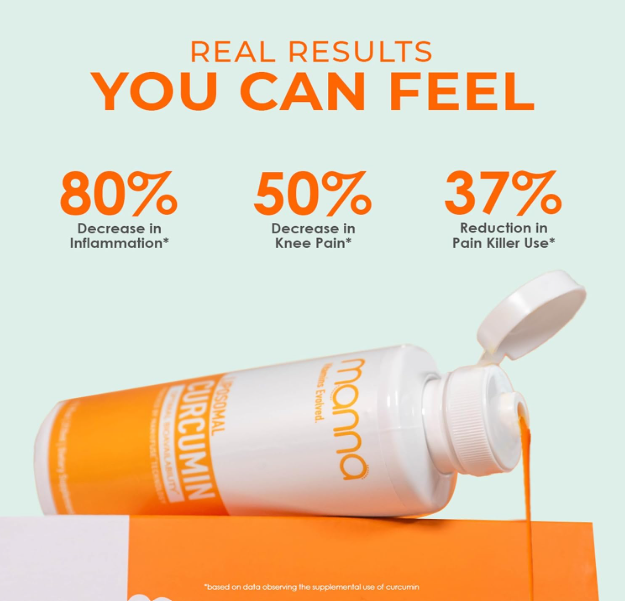
Liquid liposomal delivery · Maximum systemic absorption · No black pepper required
- Phospholipid shell bypasses first-pass metabolism
- Liquid form → faster absorption than capsules
- Directly mirrors the lipid-delivery mechanism in the 2024 NO bioavailability trial
- No need for piperine — the delivery system does the job
Affiliate link — I earn a small commission at no extra cost to you. I recommend this product because the formulation matches the evidence, not because of the commission.
If budget is a factor or you’re looking for a solid daily maintenance formula to complement cardiovascular lifestyle changes, Curcumin C3 Complex® with BioPerine® is the best-in-class piperine-enhanced option — backed by decades of clinical research. But for the specific goal of endothelial function and systemic cardiovascular support, liposomal wins on the bioavailability argument.
For a full comparison of enhanced delivery formats — including BCM-95®, Meriva®, and CurcuWin® — see: Best liposomal turmeric supplements — reviewed and ranked.
Also useful: Liposomal turmeric benefits and how to use it | What to look for when choosing a turmeric supplement
Other Turmeric Forms: What to Look for in Any Supplement
If you’re comparing options, here’s the hierarchy for heart-health-specific supplementation:
- Liposomal curcumin (liquid or softgel) — highest systemic bioavailability, best for endothelial/cardiovascular targets
- BCM-95® (turmeric + essential oils complex) — enhanced without black pepper, good systemic absorption. See: What is BCM-95?
- Curcumin C3 Complex® + BioPerine® — most clinically researched, broad cardiovascular evidence base, best value. See: Curcumin C3 Complex hub
- CurcuWin® — patented water-dispersible format with 46x bioavailability improvement
- Standard turmeric powder — limited systemic absorption; fine for culinary use and mild gut-level effects, not recommended as primary cardiovascular intervention
Whatever you choose, always verify:
- Standardised to 95% curcuminoids — the active fraction, clearly stated on label
- Third-party tested — Certificate of Analysis (CoA) available. Adulterated turmeric containing lead chromate adds toxic load to the very cardiovascular system you’re trying to protect. See: The turmeric adulteration problem — what it means for your health
- GMP-certified manufacturing
- Our V5 testing protocol — how we evaluate every supplement we recommend: OrGainIt’s Gold Standard Review Protocol
For the full picture of cardiovascular-adjacent benefits, including weight and metabolic health: Turmeric for weight loss — metabolic effects | Turmeric + ginger — the anti-inflammatory duo
Frequently Asked Questions: Turmeric for Heart Health
Is turmeric good for your heart?
Yes — the evidence base is genuinely strong. Multiple meta-analyses and RCTs confirm that curcumin (turmeric’s active compound) supports cardiovascular health through endothelial function improvement, NF-κB anti-inflammatory effects, LDL and triglyceride reduction, and Nrf2-mediated antioxidant protection. A 2024 RCT showed a 36% increase in nitric oxide bioavailability with enhanced-delivery curcumin. That said, turmeric is a complementary support tool — not a substitute for medications or lifestyle changes prescribed by your doctor.
How does curcumin improve heart health at a molecular level?
Curcumin targets cardiovascular risk at multiple levels simultaneously: it inhibits NF-κB (the master inflammatory transcription factor driving arterial plaque), activates Nrf2 (switching on the body’s own antioxidant enzymes), restores nitric oxide bioavailability in the endothelium (improving arterial flexibility), and reduces LDL oxidation (preventing the specific form of LDL that drives atherosclerosis). Yang et al. (2024, PMID 38312990) provides the most comprehensive recent review of these mechanisms.
Can turmeric lower blood pressure?
Evidence is building. A 2024 meta-analysis (PMID 39265778) found curcumin supplementation significantly improved diastolic blood pressure and pulse wave velocity (a measure of arterial stiffness) in patients with metabolic disorders. The mechanism is primarily via improved endothelial nitric oxide production — NO is the molecule your arteries use to dilate and regulate pressure. Results are most pronounced in people with elevated baseline readings; effects in people with already-normal blood pressure are minimal.
Is turmeric safe with heart medications?
This depends entirely on which medications you’re taking. Curcumin has documented antiplatelet (blood-thinning) effects that can dangerously compound anticoagulants (Warfarin, Eliquis, Xarelto, Pradaxa) and antiplatelets (Plavix, Brilinta, aspirin). There is also evidence of CYP3A4 enzyme interaction with some statins. This is not a recreational concern — it’s a genuine pharmacological interaction. Always disclose any supplement use to your cardiologist before starting. See the full warning section above and our side effects and drug interactions guide.
What is the best turmeric supplement for heart health?
For cardiovascular-specific benefits — particularly endothelial function and systemic anti-inflammatory effects — liposomal curcumin is my top recommendation. The phospholipid delivery system maximises systemic bioavailability, which is necessary for curcumin to actually reach arterial tissue. Manna Vitamins Evolved Liposomal Liquid Curcumin is the specific product I’d start with: check current pricing on Amazon. If budget is a factor, Curcumin C3 Complex® with BioPerine® is the strongest evidence-backed alternative at a lower price point.
How much curcumin should I take for cardiovascular health?
The RCTs showing meaningful cardiovascular effects have typically used 200–500mg of standardised curcuminoids per day with an absorption-enhancing agent. With liposomal delivery, effective doses can be lower because bioavailability is significantly higher — meaning more of the curcumin actually reaches your bloodstream. Always follow the manufacturer’s dosing guidance and start at the lower end of the recommended range. The standard piperine-enhanced formulas like C3 Complex generally use 500–1000mg curcuminoids + 5–10mg piperine.
Can turmeric cause heart palpitations?
In rare cases, very high doses of turmeric can cause palpitations. This is more likely with excessively large doses (multi-gram daily intakes) or in people who are sensitive to turmeric’s blood-pressure-modulating effects. At standard supplemental doses (200–500mg curcuminoids), palpitations are not a commonly reported side effect. If you experience them, stop supplementing and consult your doctor. Those with existing arrhythmias should be particularly cautious and consult their cardiologist first.
Is turmeric the same as curcumin — and does the difference matter for heart health?
Yes, the difference matters significantly for cardiovascular use. Turmeric root contains only 2–5% curcumin by weight. Cooking with turmeric provides valuable dietary polyphenols and is a worthwhile habit — but it won’t deliver the therapeutic doses confirmed in cardiovascular RCTs. For heart-specific benefits, you need a standardised curcumin extract (minimum 95% curcuminoids) with an enhanced delivery system. Don’t rely on the spice tin; it’s not a therapeutic dose. See our complete turmeric supplement benefits hub for the full picture.
Related Reading
- ? What is Liposomal Turmeric? The Science Behind Enhanced Delivery
- ? Best Liposomal Turmeric Supplements — Independently Reviewed
- ? Liposomal Turmeric Benefits, Dosage & How to Use It
- ? Turmeric for Inflammation — The Complete Evidence Guide
- ? Turmeric for Diabetes — Addressing the Metabolic-Cardiovascular Link
- ⚗️ Curcumin C3 Complex® — The Gold Standard Explained
- ⚠️ Turmeric Side Effects & Drug Interactions — Full Safety Guide
- ? The Turmeric Adulteration Problem — Why Testing Matters
- ? OrGainIt’s V5 Review Protocol — How We Evaluate Every Product
- ? Turmeric Supplement Benefits — Complete 12-Benefit Hub
- ? Turmeric & Ginger — The Zingiberaceae Anti-Inflammatory Duo
- ⚖️ Turmeric for Weight Loss — Metabolic & Cardiovascular Benefits



Hey Robert, Thanks for writing and sharing latest news Turmeric For Heart Health 2019/20 Does It works?. I enjoy and learn lots of things from your article and found it very useful for me. My grand father faces heart problems. A 2019 review of research on turmeric found that it has a range of positive impacts on heart health, and can indeed be used to prevent heart attacks or strokes, and to complement some other heart therapies.Thanks you sharing this good news. We will also share it with our friends.Parveen
Hi Parveen,
I’m so glad you found the article helpful — and even more so that you’re looking into natural ways to support your grandfather’s heart health. You’re absolutely right: a growing body of research suggests turmeric (and its active compound, curcumin) may play a role in supporting cardiovascular wellness, particularly due to its anti‑inflammatory, antioxidant, and cholesterol‑modulating properties.
That said, turmeric shouldn’t replace medical care, but it can often complement standard therapies when used thoughtfully. For example, some studies reviewed in recent years point to turmeric’s role in:
Supporting healthy blood vessel function
Helping balance cholesterol levels
Reducing inflammation that stresses the heart
If you want to dive deeper, I’ve put together a full guide here: ???? Turmeric for Heart Health.
And if you’re curious about the latest scientific findings, I break those down in this article: ???? Latest Research on Turmeric.
I wish your grandfather the very best — and if he’s already on medications, it’s always wise to check with his doctor before adding turmeric or any supplement regularly.
Warm regards,
Robert
Thank you for your post. It is helpful for me. I am closing to 60 years old and occasionally I feel pain in the front of my heart. I always want to do something for my heart health, but never take time to do the research.
Here comes your article. It looks turmeric is what I need to maintain my heart health. I particularly like the part: Best Ways To Use Turmeric Powder For Heart Health. You give the detailed instruction on how to use turmeric for heart health. You are absolutely right that the best way to use turmeric powder for heart health is to make it a part of everyday routine. I am going to integrate turmeric into my daily foods, since it works with so many different kinds of recipes.
It is kind of you sharing this valuable information with us, which has the potential to save life.
Hi Anthony, I am so grateful and pleased you discovered the article here, I know you will notice the big difference and the pain in your heart you speak of to subside significantly. I have been to hospital twice pryor to my experience with taking turmeric for pleurisy related pains. (felt like a heart attack)
Since being on a supplement I haven’t had any such pains and can exert myself much better.
I am confident using turmeric for you heart issue will be the same.
All the best Rob
As a person searching for more information about Turmeric for another family member as they don’t have the internet to be able to search for the information. I like that you gave some great info on the questions that are asked about this product. I never knew that you could take something like this and then have to worry about your heart health. Do you use this personally and would you recommend it to your family and friends? I don’t want to give a positive review of this Turmeric which seems to be a great idea to use but still not sure about it. I am so happy you have put some great info here for us all to read and learn about it. Thank you again
Douglas
Greetings Douglas. I applaud you in your diligence here and I don’t think you can ever be to careful. If in doubt ask it out. 🙂 Turmeric is a very natural product, and poses no real risk. The main concern pointed out is for those who are currenly recieving heart treatment (and primarily JUST regarding blood thinners). As Turmeric is natural heart thinner, it is recommended that your medical team is aware and or involved and probable blood monitoring to be established in a transition period.
Other than that It is perfectly safe and extremely rewarding for it’s overall benefit.
I hope that clarifies your concern, don’t hesitate to sing for any further explanation. I hope your family member finds the confidence to trust in the power of curcuminoids.
All the best Rob