
BCM-95 vs Turmeric: What’s the Difference and Which Is Better? (2026)
BCM-95® vs turmeric: BCM-95® delivers ~7× more free curcumin than standard extract (PMID 20046768). No piperine needed.
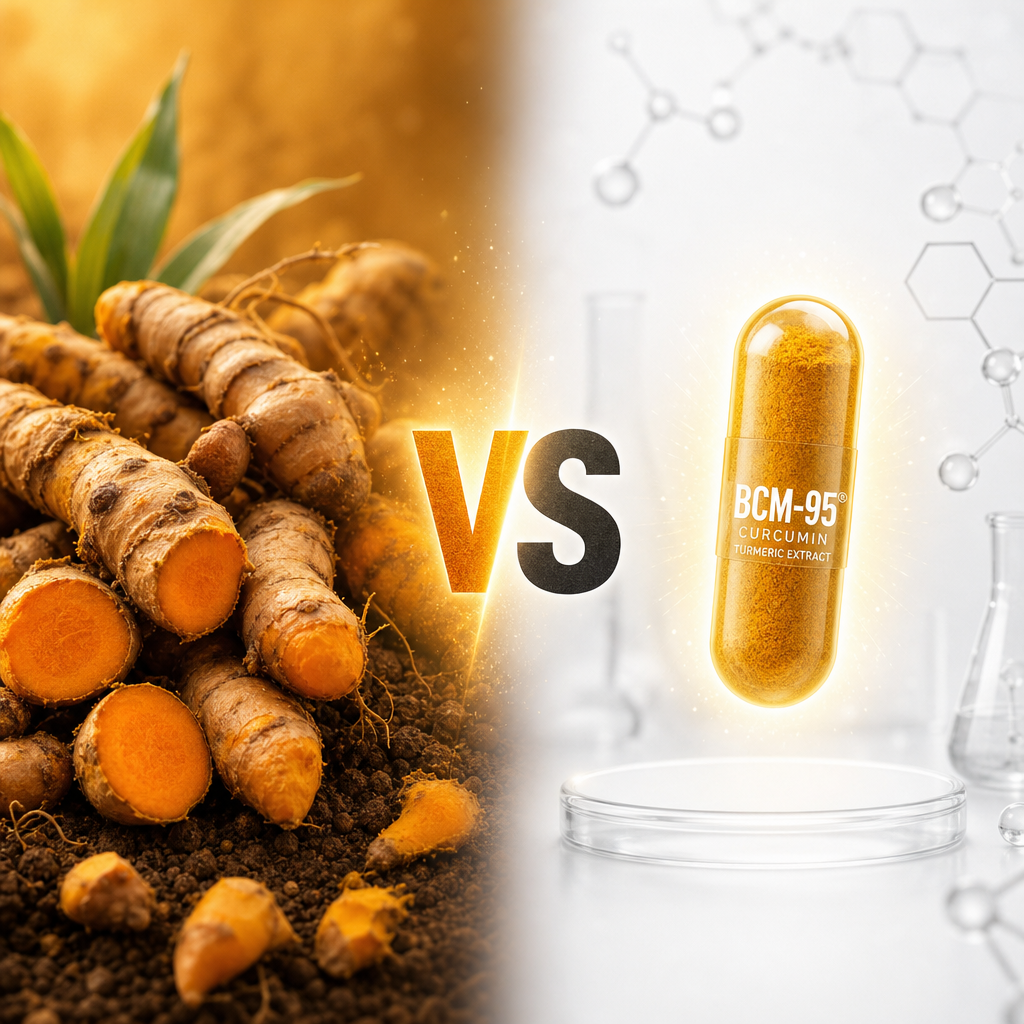
⚡ BCM-95® vs Turmeric: The Short Answer
BCM-95® is not the same as turmeric — and the difference matters enormously. Whole turmeric contains only 2–5% curcumin, most of which is destroyed before it reaches your bloodstream. BCM-95® delivers a standardised 95% curcuminoid complex with turmeric essential oils that boosts plasma curcumin levels up to 6.93× higher than standard curcumin extracts (PMID: 20046768). If you want the anti-inflammatory and joint benefits that clinical trials demonstrate, BCM-95® is the evidence-backed choice.
Best BCM-95® pick: Terry Naturally CuraMed 750mg →
9+ years comparing curcumin formulations following ankle injury. Personal experience across BCM-95, CurcuWin, Meriva, Longvida, and standard turmeric. About Robert →
The supplement aisle is full of turmeric products making near-identical inflammation claims. Understanding the difference between raw turmeric, standard curcumin 95% extracts, and patented bioavailable formulations like BCM-95® is the single most important decision you’ll make when choosing a curcumin supplement. This guide cuts through the noise.
BCM-95® vs Whole Turmeric Powder
? Whole Turmeric
- 2–5% curcumin content
- Low bioavailability — most curcumin destroyed in gut
- Contains 100s of other turmeric compounds
- Good in food, minimal supplement impact
- Cheap, widely available
- No meaningful clinical trial data at food doses
? BCM-95® Curcumin
- 95% curcuminoid complex
- 6.93× higher plasma levels than std extract
- Curcuminoids + essential oils (turmerones)
- Piperine-free enhanced absorption
- Multiple peer-reviewed clinical trials
- Consistent, standardised dose every time
The bottom line: using whole turmeric to get the anti-inflammatory benefits studied in clinical trials is like eating poppy seeds to treat pain. The concentration difference is too great. A clinical trial dose of 1,000mg BCM-95® curcumin would require consuming roughly 20–50g of raw turmeric powder daily — an impractical and potentially problematic amount.
BCM-95® vs Standard Curcumin 95%
This is the comparison that most buyers don’t know to make. “Curcumin 95%” sounds clinical and standardised — and it is, to a point. But the 95% refers only to curcuminoid content. Bioavailability is a separate problem entirely.
Standard curcumin 95% has poor systemic absorption because curcumin is hydrophobic and metabolises rapidly in the gut. BCM-95® solves this by recombining the isolated curcuminoids with turmeric’s essential oil fraction (turmerones), recreating a modified whole-plant matrix that slows metabolism and extends absorption.
Result: BCM-95® delivered up to 6.93× higher AUC plasma curcumin levels vs standard 95% curcumin extract in a peer-reviewed crossover bioavailability study. PMID: 20046768
BCM-95® vs Other Bioavailable Curcumin Formulations
BCM-95® is not the only high-bioavailability curcumin form. Here’s how it compares to the main alternatives:
| Formulation | Enhancement Method | Bioavailability | Piperine-free | Best For |
|---|---|---|---|---|
| BCM-95® | Turmeric essential oils (turmerones) | ~7× vs std extract | ✅ | General inflammation, joint health |
| Meriva® (Phytosome) | Phosphatidylcholine binding | ~29× vs std extract | ✅ | Osteoarthritis, joint-specific |
| CurcuWin® | OmniSome® emulsion technology | 46× vs std extract | ✅ | Athletes, performance, clinical dosing |
| Longvida® (SLCP) | Solid lipid particles | 65× free curcumin | ✅ | Cognitive health, BBB penetration |
| Curcumin + Piperine | CYP3A4/P-gp inhibition | ~20× vs std extract | ❌ | Budget option if no medications |
| Standard Curcumin 95% | None | Baseline (1×) | ✅/❌ | Not recommended for therapeutic use |
Bioavailability figures are from independent peer-reviewed studies. Direct head-to-head comparisons between formulations are limited — figures reflect each formulation’s best-evidence study vs standard curcumin.
BCM-95® vs Piperine + Curcumin
Piperine-enhanced curcumin is the most common “bioavailability solution” on the market. Piperine works by inhibiting CYP3A4 and P-glycoprotein — the same liver enzymes that metabolise many prescription medications. This creates a real drug interaction risk that BCM-95® completely avoids.
Choose BCM-95® over piperine+curcumin if:
- You are on any regular prescription medication
- You take statins, blood thinners, antidepressants, or immunosuppressants
- You have had issues with GI “heat” from black pepper extract
- You want the absorption benefit without the drug interaction risk
BCM-95® vs Meriva® for Joint Health
Meriva® phytosome (curcumin + phosphatidylcholine) has the most extensive and specific osteoarthritis RCT data of any curcumin formulation. If your primary goal is knee or hip OA management specifically, Meriva® deserves consideration as a primary choice or alongside BCM-95®.
BCM-95® holds its own for general inflammatory conditions and is also backed by solid OA trial data — it matched diclofenac in one head-to-head RCT (PMID: 30975196). Both are piperine-free. The choice between them comes down to specific products available, dosing convenience, and cost. See Meriva® Curcumin Benefits →
BCM-95® vs CurcuWin® for Athletes
CurcuWin® claims 46× bioavailability vs standard curcumin — higher than BCM-95®’s ~7×. For athletes and those seeking maximum plasma curcumin concentration, CurcuWin® may edge ahead. However, BCM-95® has more published clinical trial data behind it for inflammatory outcomes specifically. Both are piperine-free. See What Is CurcuWin® →
Which Should You Choose?
- General inflammation, joint pain, daily wellness → BCM-95® — strong evidence base, well-tolerated, multiple brand options
- Knee/hip OA specifically → Meriva® — deepest OA-specific RCT data
- Cognitive/brain health → Longvida® — optimised for BBB penetration and free curcumin levels
- Maximum bioavailability, athletic recovery → CurcuWin® — highest bioavailability claim
- On medications, piperine-free required → BCM-95® or any of the above (all piperine-free)
- Whole turmeric food use → Fine as a food, insufficient for therapeutic benefit
Top BCM-95® products backed by clinical evidence:
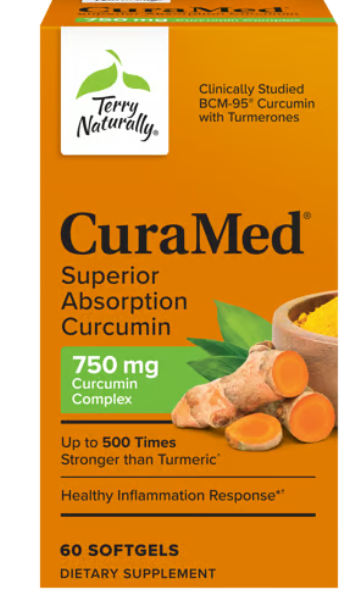
Progressive Labs BCM-95 — Vegan | Amazon →
Xandro Lab BCM-95 — 3rd-party tested | Xandro →
? Robert’s full curated supplement list on Benable →
Related Reading
- What Is BCM-95® Curcumin? The Science Explained
- BCM-95® Benefits: Clinical Evidence
- Best BCM-95® Curcumin Supplements (2026)
- What Is Meriva® Curcumin?
- What Is CurcuWin® Curcumin?
- What Is Longvida® Curcumin?
- BCM-95® Curcumin Reviews: Top Brands Compared
- Where to Buy BCM-95® Curcumin
- BCM-95® Dosage Guide
- BCM-95® Side Effects and Safety
- Turmeric Supplement Benefits: 2026 Guide
Frequently Asked Questions
What is the difference between BCM-95 and turmeric?
Turmeric is the whole root containing 2-5% curcumin with low bioavailability. BCM-95 is a patented curcumin extract standardised to 95% curcuminoids with added turmeric essential oils, delivering up to 6.93x higher plasma curcumin levels than standard extracts (PMID: 20046768). BCM-95 is designed for therapeutic supplementation; whole turmeric is a culinary spice.
Is BCM-95 better than standard curcumin 95%?
Yes, significantly. Standard curcumin 95% has poor bioavailability — most of it never enters the bloodstream meaningfully. BCM-95 combines curcuminoids with turmeric essential oils to achieve 6.93x higher plasma levels, without the drug interaction risk of piperine-enhanced products.
BCM-95 vs turmeric: which is better for inflammation?
BCM-95 curcumin is significantly more effective for therapeutic anti-inflammatory use. Clinical trials show BCM-95 at 1,000mg/day reduced CRP by 37% and TNF-alpha by 74% vs paracetamol. Whole turmeric at food doses has no comparable clinical evidence for anti-inflammatory outcomes.
Is BCM-95 the same as curcumin with black pepper?
No. BCM-95 is piperine-free — it uses turmeric’s own essential oils for absorption enhancement, not black pepper extract (piperine). This makes it safer alongside medications, as piperine inhibits CYP3A4 liver enzymes that metabolise many prescription drugs.
What are the top BCM-95 curcumin alternatives?
Main alternatives: Meriva phytosome (best OA-specific data), CurcuWin (highest bioavailability claim at 46x), Longvida SLCP (best for cognitive/brain health). All are piperine-free. BCM-95 has the most diverse clinical trial record for general inflammation outcomes.
How much turmeric would I need to equal BCM-95?
A clinical trial dose of 1,000mg BCM-95 curcumin would require approximately 20-50g of raw turmeric powder daily to achieve equivalent curcuminoid content — before accounting for bioavailability differences. This is an impractical and potentially problematic amount for daily consumption.
Is BCM-95 or Meriva better for joint health?
Both are strong choices. Meriva phytosome has the most extensive osteoarthritis-specific RCT data. BCM-95 has solid OA data and also matched diclofenac in a direct trial (PMID 30975196). For pure joint/OA focus, Meriva edges ahead. For general inflammation with solid joint data, BCM-95 is excellent.
Can I take turmeric and BCM-95 together?
Yes, but it adds little therapeutic value. BCM-95 already contains the active curcuminoids from turmeric in a standardised, bioavailable form. Adding whole turmeric on top provides minimal additional curcumin uptake given turmeric’s low and inconsistent curcuminoid content.